Thinking about moving out on your own? You’re probably wondering, “What age can I legally move out?” It’s a big step, and knowing the rules can save you from serious trouble.
Whether you’re eager for independence or just curious about your rights, understanding the legal age to move out—and what options you have if you’re not quite there yet—is crucial. Keep reading to discover the key facts, practical tips, and legal insights that will help you make the best decision for your future.
Your freedom might be closer than you think!
Legal Age To Move Out
Knowing the legal age to move out is important for young people planning independence. Laws vary across states, and understanding them helps avoid legal trouble. This section explains the legal age rules and differences.
Minimum Age In Texas
In Texas, the minimum age to move out without parental consent is 18 years. Before this age, parents or guardians have legal responsibility for minors. A minor can only leave home early through emancipation, a legal process granting independence.
Variations Across States
Each state in the U.S. sets its own age rules for moving out. Most states require individuals to be 18 to live alone legally. Some states allow minors to move out earlier with parental permission or court approval. It is important to check local laws before making decisions.
Age Of Majority Explained
The age of majority is when a person is legally an adult. At this age, they gain full legal rights and responsibilities. For most states, it is 18 years old. After reaching this age, individuals can rent housing, sign contracts, and make decisions without parental consent.
Age of Majority by State – When You Become a Legal Adult
The age of majority is the age at which you are no longer a minor and gain full legal rights (including moving out without parental consent). In 2026:
-
18 years old — 47 states + Washington D.C.
(Almost everywhere in the U.S.) -
19 years old — Alabama and Nebraska
-
21 years old — Mississippi (and Puerto Rico, though not a state)
Bottom line: In most of the United States, you can legally move out at 18 without needing parental permission or court approval.
Parental Rights And Restrictions
Parents have legal rights and duties toward their children. These rights include control over where their children live. Laws protect parents’ authority until children reach adulthood.
Minors cannot simply decide to leave home without parental consent. The law balances a child’s independence with parental responsibility. Understanding these rules helps clarify when moving out is allowed.
Parental Custody Laws
Parents or guardians hold legal custody of minors. Custody means responsibility for the child’s care and decisions. This includes where the child must live. Courts enforce custody laws to protect the child’s well-being.
Custody laws differ by state but usually require minors to live with parents. Only the court can change this arrangement. Parents can seek legal help to enforce custody rights if needed.
Legal Consequences For Parents
Parents face legal duties to provide for their children. If a minor leaves without permission, parents may try to bring them back. Law enforcement can assist parents in some cases. Failing to act may result in legal issues for parents.
Parents may also face consequences if they allow minors to leave unsafely. The law expects parents to protect their children. Courts review each case carefully to protect everyone’s rights.
Rights To Stop A Minor From Leaving
Parents have the right to stop minors from moving out. This right protects minors from harm and poor decisions. Without parental consent, a minor’s move can be illegal.
Parents can contact police if their child leaves without permission. The law supports parents in ensuring their child’s safety. Exceptions exist, such as emancipation or abuse situations, but these require legal steps.

Options For Moving Out Early
Moving out before reaching the legal age is possible through some specific options. These options help young people gain independence earlier than usual. Each option has different rules and requirements. Understanding these choices can guide you to the best path.
Parental Consent And Agreements
Parents can allow a minor to move out with their permission. They may sign an agreement for the child to live with another adult. This agreement makes the living arrangement legal and clear. It often involves relatives or trusted family friends. Having written consent protects both the minor and the parents.
Emancipation Process
Emancipation is a legal way to become independent before adulthood. The court decides if a minor can handle living alone. The minor must prove financial stability and maturity. This process is difficult and requires strong evidence. If approved, the minor gains many adult rights early.
Safe Living Conditions Exception
Some minors leave home due to unsafe or abusive environments. Authorities can help protect these young people. Child Protective Services or hotlines offer support and safe alternatives. This exception allows minors to move out without parental consent. Safety is the main priority in these cases.
Emancipation Details
Emancipation is a legal process that allows minors to gain independence from their parents. It lets young people live on their own before the usual age of majority. Understanding the details of emancipation helps you know how to move out legally and responsibly.
This process is not simple. It requires meeting specific conditions and following court steps. Proof of financial independence and maturity is essential. The court carefully reviews each case to protect the minor’s best interests.
Requirements For Emancipation
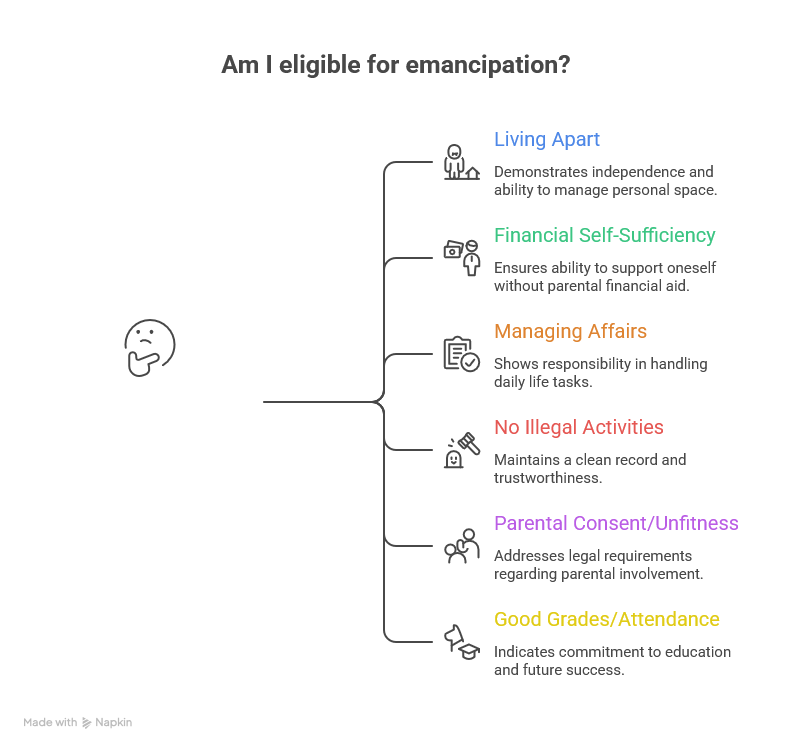
To be emancipated, a minor must meet several requirements. Usually, you must be at least 16 years old. You need to prove you can care for yourself without parental support. Living separately from your parents is also necessary. The court checks if emancipation suits your situation and if it is safe for you.
Minimum Age for Emancipation (2026)
Most states allow emancipation petitions starting at 16, but some go lower:
-
14–15 — Rare, but possible in a few states with strong proof (e.g., California, Kansas, Illinois in exceptional cases)
-
16 — Most common minimum (e.g., California, New York, Texas, Florida, Pennsylvania)
-
17 — Some states (e.g., Arkansas, Missouri)
-
No fixed minimum — A few states have no statutory minimum but require proof of maturity and independence
Financial Independence Proof
Showing financial independence is key to emancipation. You must prove you have a steady income. This income should cover rent, food, and other living costs. Evidence like pay stubs or a job contract helps. The court wants to see you can support yourself fully.
Court Procedures
The emancipation process involves filing a petition in court. You must submit documents that explain your reasons and situation. A judge will hold a hearing to review your case. Parents or guardians may also attend. If the judge agrees, they issue an emancipation order. This order grants you legal rights as an adult.
Handling Unsafe Situations
Handling unsafe situations at home is critical for minors considering moving out. Safety must be the top priority. Recognizing danger early helps prevent harm. Knowing the right steps can protect you and others in harmful environments. Support systems exist to guide and assist those in distress.
Identifying Unsafe Or Abusive Homes
An unsafe home may involve physical, emotional, or verbal abuse. Signs include constant fear, injuries, or neglect of basic needs. Homes with substance abuse or violence are also unsafe. Trust your feelings; if you feel unsafe, act on it. No one should live in fear inside their own home.
Contacting Child Protective Services
Child Protective Services (CPS) helps protect children from harm. You can contact CPS if you are in danger. Provide clear details about your situation and location. CPS will investigate and may offer alternative living arrangements. They work to keep children safe and find suitable care when needed.
Resources And Hotlines
Several hotlines offer immediate help and advice for unsafe situations. The National Runaway Safeline provides confidential support for youth. Local shelters and counseling centers also offer assistance. Keep important phone numbers saved and accessible. Reaching out can be the first step to safety.
Steps Before Moving Out
Before moving out legally, several important steps need attention. These steps help ensure a smooth transition and avoid legal troubles. Preparing well also builds trust between you and your parents. Planning carefully reduces stress and confusion during this big change.
Communicating With Parents
Start by having an honest talk with your parents. Explain why you want to move out and where you plan to live. Listen to their concerns and answer calmly. Good communication can prevent misunderstandings and conflicts. Showing respect helps keep the conversation positive.
Getting Agreements In Writing
If your parents agree to your move, get it in writing. A written agreement can cover important details like where you will live and who will support you. This paper protects both sides and makes the plan clear. Keep a copy for your records and share one with your parents.
Seeking Legal And Counseling Advice
Talk to a family law attorney or counselor before moving out. They can explain your rights and legal options. Professionals also help if you want emancipation or face unsafe home conditions. Getting advice early avoids future problems and gives you confidence in your decisions.
Special Situations Where You Can Move Out Earlier
Even without emancipation, some situations allow minors to live independently:
-
Military enlistment — Join at 17 with parental consent (18 without) — automatically emancipates in many states
-
Marriage — Marrying at 16–17 (with parental/judicial consent in most states) often emancipates you
-
Parental consent — If parents agree, you can move out at any age (though they may still be financially responsible until 18)
-
Abuse/neglect — If parents are abusive or neglectful, contact CPS/Child Protective Services — they can remove you from the home and place you in foster care or with relatives
-
Runaway laws — Police usually return 16–17-year-olds home unless abuse is proven, but some states treat 17-year-olds as adults for runaway purposes
Legal Risks And Considerations
Moving out before reaching the legal age involves serious legal risks. Understanding these risks helps avoid trouble with the law and family. Laws protect minors and parents, so moving out without permission can have consequences. Knowing your rights and the law is important before making this decision.
Consequences Of Running Away
Running away from home is illegal for minors in many states. The police may return a runaway to their parents. Courts can get involved to protect the child’s safety. Running away can affect your future, like school or job opportunities. It also creates stress for your family and yourself.
Harboring A Minor Laws
People who let minors stay without parental permission can face legal trouble. Harboring a runaway child is a crime in many places. It can lead to fines or jail time for those who help. These laws aim to protect families and children. Be cautious about where you stay if you move out early.
Potential Legal Actions By Parents
Parents can take legal steps to bring their child back home. They may file reports with police or child protective services. Courts might order the return of the minor. Parents can also seek custody enforcement through legal channels. These actions can complicate your plan to live independently.
Support Networks And Resources
Moving out legally at a young age can be complicated. Support networks and resources offer help and guidance during this process. They provide advice, counseling, and legal assistance. These resources aim to protect young people and their rights. Here are some key options available to those considering moving out.
National Runaway Safeline
The National Runaway Safeline offers free support for youth in crisis. They provide confidential help by phone or online chat. Trained counselors listen and offer options to stay safe. They help connect young people to local shelters and services. This helpline is available 24/7 for anyone needing immediate assistance.
Family Therapy Options
Family therapy can improve communication and resolve conflicts at home. Licensed therapists help families understand each other better. Therapy sessions create a safe space to share feelings and concerns. Working together can make living at home easier and safer. This support may prevent the need to move out prematurely.
Legal Aid And Community Support
Legal aid organizations provide advice on minors’ rights and emancipation laws. They help with paperwork and court processes if moving out is necessary. Community centers often offer workshops and support groups for youth. These resources ensure young people understand their legal options. Accessing legal help can protect against wrongful eviction or abuse.
What Happens If You Move Out Without Permission or Emancipation?
- Under 16 — Police can return you home; parents may file missing person report
- 16–17 — Many states treat you as a “runaway” but police often do not force return if you have a safe place (especially if abuse is alleged)
- Criminal charges — Parents can sometimes press charges for harboring a runaway (against the person housing you)
- Parental support — Parents may still be legally required to support you financially until 18 (or 19/21 in some states)
Bottom line: Moving out at 17 without permission is a gray area — not strictly illegal for the minor, but risky and parents can still pursue legal action.
Practical Advice If You Want to Move Out at 18 (or Earlier)
- At 18: You can move out the day you turn 18 (or 19/21 in AL, NE, MS). No permission needed.
- Before 18: Explore emancipation, get parental consent, or contact authorities if unsafe at home.
- Safety first: Have a safe place to live, income, and support network before leaving.
- Resources:
- National Runaway Safeline: 1-800-RUNAWAY
- Childhelp USA (abuse): 1-800-4-A-CHILD
- Local legal aid for emancipation petitions
Turning 18 (or 19/21) unlocks full legal independence in the U.S. — including the right to move out on your own terms. Plan carefully, know your state’s rules, and prioritize safety.
Frequently Asked Questions
Can You Legally Move Out At 16 In The Us?
In most US states, you cannot legally move out at 16 without parental consent. Emancipation may allow it if granted by court.
Can I Leave Home At 17 In Texas?
In Texas, you cannot legally leave home at 17 without parental permission. Emancipation or court approval is required to move out.
Can Your Parents Legally Stop You From Moving Out At 17?
Parents can legally stop a 17-year-old from moving out since they hold custody until age 18. Emancipation or parental consent can allow moving out earlier.
What Can I Do If My 16 Year Old Refuses To Come Home?
Talk calmly to understand their reasons and feelings. Consider family therapy for communication. Contact authorities if unsafe. Explore legal emancipation or guardianship options with a lawyer.
Conclusion
Knowing the legal age to move out helps you plan better. Most states say 18 is the age to leave home legally. Younger teens can move out only with parental consent or court approval. Emancipation is an option but takes time and proof of independence.
Always talk openly with your parents or guardians first. Getting legal advice can make the process smoother. Staying informed keeps you safe and prepared for this big step. Moving out is a big decision—be sure you understand the rules.
Disclaimer: The content on this page is for general information only and should not be considered legal advice. We work hard to provide accurate and up-to-date details, but we can't guarantee the completeness or accuracy of the information. Laws and rules change often, and interpretations may vary. For specific advice, always consult a qualified legal expert. We are not liable for any actions you take based on this information. If you spot any errors or outdated content, please contact us, and we’ll update it as soon as possible.