
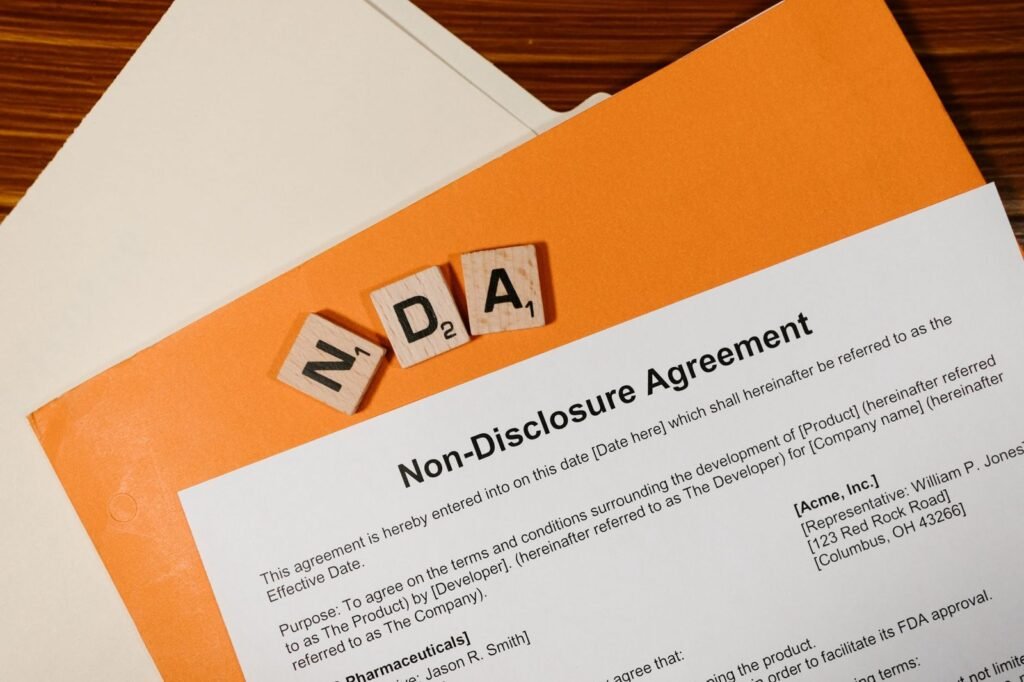
The most common mistake owners make is failing to define what information is truly secret, as vague non-disclosure agreement (nda) mistakes that could expose your business often arise from overly broad language that courts refuse to enforce. You should explicitly list the specific categories of data, such as trade secrets, client lists, or proprietary software code, that the recipient must protect under the contract.
Improving your legal protection strategy

Most business owners treat confidentiality as a generic catch-all, but this approach rarely holds up if you end up in a legal dispute. You need to distinguish between casual information and protected secrets to ensure your agreement remains valid and enforceable in court.
| What most people do | What to do instead | Why it matters |
|---|---|---|
| Using generic templates | Customizing for your industry | Avoids unenforceable broad clauses |
| Ignoring time limits | Setting a 2-5 year term | Prevents permanent, invalid restrictions |
| Forgetting return clauses | Mandating data destruction | Removes lingering access risks |
| Omitting exclusions | Listing public information | Keeps the contract legally valid |
| Ignoring state laws | Checking local statutes | Prevents invalidation by regional rules |
| Omitting specific remedies | Defining exact damages | Saves costs on litigation fees |
Clearly define the protected subject matter
People often assume that every word spoken in a meeting is confidential, but you can’t legally protect information that’s already public knowledge. If you try to force a signatory to keep public facts secret, a judge may decide the entire document is invalid. You must identify exactly what counts as a trade secret, such as the guidelines on protecting proprietary assets.
If you’re sharing technical designs, name the specific project or file version. If you’re sharing client databases, define the format and the date range of the records. If you don’t specify these details, the recipient might argue that the information was already known or that they didn’t know it was confidential. Always mark documents as “Confidential” before sharing them to avoid future confusion.
Avoid the common mistake of using broad, catch-all language like “all business information.” Courts frequently strike down agreements that fail to distinguish between proprietary insights and general industry knowledge. If your contract covers everything, it effectively protects nothing. You must carve out the specific information that provides your company with a competitive edge.
Ask yourself if the information would be obvious to a competitor with access to the same market data. If the answer is yes, don’t include it in your definition of protected subject matter. Instead, focus on the “secret sauce”—the unique algorithms, internal cost structures, or specific customer acquisition strategies that aren’t readily available to the public.
Use the “three-bucket” rule to organize your disclosures. Place information into one of three categories: public, confidential, or trade secret. If the data is public, omit it from the agreement entirely. If it’s standard business information, mark it as confidential. If it’s a core trade secret, define it with extreme precision, referencing specific document IDs or internal project codenames.
When dealing with oral disclosures, you must follow up in writing. A common error is assuming that a verbal “this is secret” tag holds up in court. If you discuss sensitive strategy in a meeting, send a summary email within 24 hours. List the specific topics discussed and label them as confidential. This creates a paper trail that proves you took reasonable steps to keep the information private.
If you’re unsure whether a piece of information qualifies as a trade secret, apply the “independent economic value” test. Does this information derive value from the fact that others don’t know it? If a competitor could easily replicate your process by observing your finished product, that process is likely not a trade secret. Protect only what can’t be reverse-engineered or gleaned from public filings.
Finally, remember that the burden of proof rests on you. If you can’t point to a specific definition in your contract that covers the leaked information, you’ll struggle to secure an injunction. Be as granular as possible. Instead of saying “all marketing plans,” say “the Q4 2025 targeted ad campaign for the X-Series product line.” Specificity is your best defense.
Set clear time limits for confidentiality

Many contracts fail because they demand secrecy forever, which is rarely enforceable for general business information. If you don’t include a reasonable expiration date, a court might strike down the entire agreement for being an unreasonable restraint on trade. A standard term for most general business information ranges from two to five years, though trade secrets like secret recipes or formulas often require longer protection.
This prevents the recipient from being tethered to a contract that no longer serves a protective purpose. Once the product hits the market, the information becomes public knowledge, rendering the secrecy clause moot.
For core proprietary code or architectural blueprints, consider a five-year term with a renewal option. This allows you to reassess the technology’s relevance before the clock runs out. If the code remains a competitive advantage, you can trigger the extension. If the technology has been superseded by newer versions, you avoid the administrative burden of managing an obsolete agreement.
You must decide if the secrecy is needed for the life of the product or just during the development phase. A common mistake is applying a blanket five-year term to every document in a data room. This overreach can signal to a judge that you’re attempting to stifle competition rather than protect legitimate assets. If your contract covers both sensitive algorithms and general pricing lists, split them into separate schedules with distinct expiration dates.
The rule is simple: if the information loses its competitive value once the project ends, set the expiration to match the project completion date. If the information provides a permanent advantage, such as a manufacturing process that can’t be reverse-engineered, explicitly state that those specific items survive the general contract expiration.
Once the time limit passes, the recipient is no longer bound by the contract. If you fail to account for the natural decay of your data’s value, you risk losing the ability to enforce secrecy on the truly critical items because the court views the entire agreement as overbroad.
Choose a duration that matches the actual economic life of your data. If you’re unsure, err on the side of a shorter term with a clear mechanism for extension. This protects your interests while keeping the agreement legally defensible.
Specify the consequences of a breach
A document without a clear plan for what happens if someone leaks your data is often just a piece of paper. People often mistake a contract for a guarantee, but it’s only a tool for seeking damages after a leak occurs.
You should include a clause that allows for injunctive relief, which is a legal order that forces the recipient to stop using your information immediately. Without this specific provision, you’re limited to seeking monetary damages, which rarely compensates for the permanent loss of trade secrets or client trust.
If you don’t define the specific remedies, you’ll have to prove the exact dollar amount of your loss in court. This is notoriously difficult and expensive, often requiring forensic experts to testify on the valuation of intangible assets. Instead, include a liquidated damages clause that sets a predetermined amount for specific breaches. This removes the burden of proving actual financial harm and provides a clear deterrent to the recipient.
Specify that the recipient is responsible for all reasonable legal fees if they violate the agreement. This shifts the financial risk to the breaching party and prevents them from using superior resources to outlast you in court. Linking the contract to a specific scope of work also helps contractors understand exactly which data they must protect.
Avoid using generic boilerplate language that ignores the specific nuances of your industry. If you handle healthcare data, your breach consequences must mention HIPAA compliance, while financial records should reference relevant regulatory fines. Tailored clauses are essential for demonstrating that you have taken appropriate steps to protect sensitive information.
If the contract involves multiple jurisdictions, always consult with a legal professional to ensure your choice of state law aligns with the contract’s enforcement rules. Some states are notoriously hostile toward non-compete or non-disclosure enforcement. If you choose a state that requires a high burden of proof for injunctive relief, your contract will fail when you need it most.
Apply the rule of specificity: if the data is high-risk, define the breach as a material failure that triggers immediate termination of the contract. If you treat every data point with the same level of consequence, you’ll struggle to enforce the contract in court. Courts prefer agreements that distinguish between a minor clerical error and a malicious theft of intellectual property. Clearly define these tiers to ensure your legal team can act swiftly when a violation occurs.
Popular tips you can safely ignore
You can use a free template for everything. Templates often miss local laws that change how courts view non-compete or non-disclosure clauses. If you rely on a generic form, you risk creating a contract that’s legally void in your specific jurisdiction. Always check your state’s statutes regarding the enforceability of restrictive covenants, as some states, like California, largely prohibit non-compete agreements regardless of how well they’re drafted.
All information is confidential. Courts hate broad statements and will ignore them; you must define the scope of your data. If you define confidential information as “anything shared during our time together,” a judge will likely strike the entire clause for being overly vague. Instead, label specific documents as “Confidential” or explicitly list the categories of data, such as customer lists or proprietary source code, that require protection.
You don’t need to sign it if you trust them. Trust isn’t a legal document, and you can’t enforce a verbal promise in court. The most common mistake people make is assuming that a handshake or an email chain serves as a binding agreement. If a dispute arises, the “parol evidence rule” may prevent you from introducing verbal promises that contradict or add to a written contract. If it isn’t in the signed document, it effectively doesn’t exist.
Just make them sign it after the meeting. It’s much harder to enforce a contract if you have already shared the secrets before the signature. When you disclose information before the contract is executed, you lose the ability to claim that the information was provided in consideration for the agreement. If you find yourself in this position, include a “ratification clause” that explicitly states the agreement covers information shared during the preceding meeting.
Always apply the rule of consideration: if you’re asking someone to sign a restrictive agreement after they have already started working or after you have already shared the trade secret, you must provide them with something of value that they didn’t have before, such as a bonus or a new promotion. Without this “new” consideration, the post-meeting signature is often worthless in court.
If you’re dealing with a sophisticated party, assume they will look for the holes in your language. If your contract lacks a “severability clause,” a single bad provision can cause the entire document to be thrown out by a judge. If you see a clause that’s too broad, strike it immediately; a narrow, enforceable contract is always superior to a broad, unenforceable one.
Steps to secure your business information

Identify the specific files, code, or processes you need to protect before drafting any document. If you can’t name the asset, you can’t protect it. Instead of using a vague “all information” clause, list the specific project names, proprietary algorithms, or client lists. Broad definitions often lead courts to strike down the entire agreement as overly restrictive.
Draft the agreement to cover only the information you identified in the first step. If you’re sharing a prototype, focus the language on design specifications and performance metrics rather than general business operations. Over-broad agreements signal to the recipient that you’re inexperienced, which weakens your negotiating position.
Set a clear expiration date, such as 3 years, depending on how long the information remains valuable. If you’re sharing high-velocity data like current marketing strategies, a 12-month window is often sufficient. For deep trade secrets or long-term manufacturing processes, you may justify 5 years. Avoid “perpetual” clauses, as many jurisdictions refuse to enforce them.
Include a requirement for the recipient to return or destroy all copies once the project ends. Without this, you have no way to prove the recipient still holds your data after the relationship sours.
State the governing law and the specific court where disputes will be handled to save costs. If you’re based in Delaware, specify Delaware law and the local Court of Chancery. If you leave this blank, you may be forced to litigate in the recipient’s home state, which can cost five figures in travel and local counsel fees.
Have both parties sign and date the final document before you disclose any information. A signature after the first email is sent is often useless in court. If you’re working with a company, ensure the person signing has the legal authority to bind the entity. Check their title; a project manager often lacks the corporate authority to sign a binding non-disclosure agreement.
If you’re dealing with highly sensitive source code, add a specific provision for “air-gapped” access. This restricts the recipient to viewing the code on a single, non-networked device. If you’re sharing general market research, a standard confidentiality clause is enough. Use the air-gap rule only for assets that would destroy your business if they were leaked publicly. Always verify the recipient’s identity before sending the file, as misdirected emails are the most common cause of data loss.
Frequently asked questions
How long should an nda last?
NDAs should generally last between two and five years, depending on the nature of the information. Trade secrets often require longer terms, while marketing plans for seasonal products may only need one year. Ensure your chosen timeframe complies with your state’s specific laws on contract duration.
Is an nda enforceable if it’s too broad?
NDAs are often unenforceable if they’re too broad because courts refuse to restrict someone’s ability to work. If a contract claims that all shared information is secret, including public data, a judge may find it unreasonable. Always define the confidential information clearly to ensure the scope remains enforceable.
What happens if the other party leaks the information?
If the other party leaks your information, you can pursue damages for breach of contract as defined in your agreement. You may seek injunctive relief to stop further disclosure and claim financial compensation for business harm. Consult a lawyer immediately if a breach occurs to properly document your losses.
Do i need a lawyer to write an nda?
You need a lawyer to write an nda if your business involves complex trade secrets or if you operate in multiple states with different laws. While templates exist for simple situations, a lawyer ensures that the language used is enforceable in your specific jurisdiction and industry. A poorly drafted document can be worse than no document at all, as it gives you a false sense of security while offering no real protection.
Can i use a digital signature for an nda?
You can use a digital signature for an NDA, as most jurisdictions recognize electronic signatures as legally binding. Use a reputable service that provides a clear audit trail of the signing process to prove validity. Confirm that electronic signatures meet all specific legal requirements in your local region.
Does an nda protect me from everything?
An NDA only protects the specific information defined as confidential within the contract. It can’t prevent the recipient from using information they already knew, received from third parties, or that’s public knowledge. Use the contract as one layer of a broader security strategy to protect your company.
Conclusion
Protecting your company’s future doesn’t have to be complicated, but it does require careful attention to detail. Before you sign your next partnership deal, take a moment to review your templates with a legal professional. They’ll help you spot potential gaps so you won’t have to worry about your secrets leaking later.
Disclaimer: The content on this page is for general information only and should not be considered legal advice. We work hard to provide accurate and up-to-date details, but we can't guarantee the completeness or accuracy of the information. Laws and rules change often, and interpretations may vary. For specific advice, always consult a qualified legal expert. We are not liable for any actions you take based on this information. If you spot any errors or outdated content, please contact us, and we’ll update it as soon as possible.