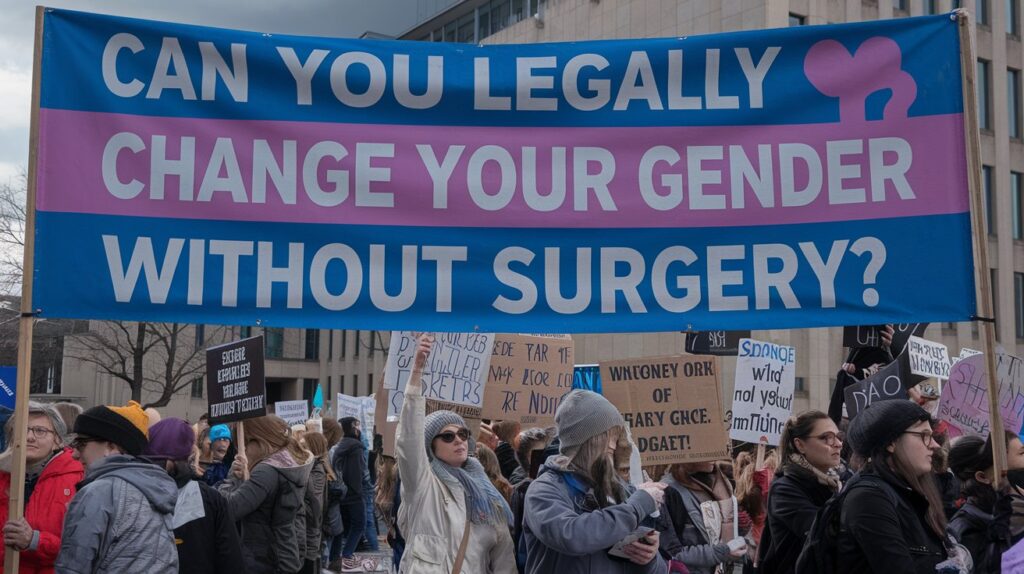
Are you wondering if you can legally change your gender without going through surgery? The good news is that in many places across the United States, you don’t have to have surgery to update your gender marker on official documents like your Social Security card or passport.
But the rules aren’t the same everywhere, and some states still have tougher requirements. This article will guide you step-by-step through what you need to know, what documents you can change without surgery, and how to navigate the process smoothly.
If you want to take control of your identity legally and confidently, keep reading to learn exactly how to make it happen.
Legal Gender Change Without Surgery
Changing your legal gender without surgery is possible in many places. Laws and rules have changed to support this option more than before. You do not always need surgery to update your gender on official documents.
Each state in the U.S. has different rules about legal gender change. Some states require proof of surgery, while others accept a simple statement from a doctor. Federal agencies have also made it easier to change gender markers without surgery.
Federal Level Options
The Social Security Administration allows gender marker changes without surgery. A simple form and a letter from a healthcare provider can be enough. The U.S. State Department lets you choose your gender on passports without medical proof. You can select male, female, or X as your gender option.
State Level Rules
Rules vary widely by state. Some states, like California, offer easy ways to change gender markers on IDs. Many states accept a letter from a medical provider confirming gender transition steps. These steps can include hormone therapy but not surgery. A few states still require surgery proof for birth certificate changes.
Steps To Change Your Legal Gender
Check the laws where you live before starting. Begin by updating federal documents like Social Security and passports. Contact your local DMV or vital records office for state-specific instructions. Consider speaking with a healthcare provider or legal expert to guide you through the process.
Federal Policies For Gender Marker
Federal policies play a key role in changing gender markers on official documents. They set standards that affect how identity is recognized across the country. These policies often make it easier to update your gender marker without surgery. Two main federal agencies handle these changes: the Social Security Administration and the State Department for passports.
Understanding these rules helps you know what to expect. The process at the federal level is often simpler than at the state level. It focuses on self-identification and medical certification rather than surgical proof.
Social Security Administration Rules
The Social Security Administration (SSA) allows you to change your gender marker on your Social Security record. You must provide a signed letter from a licensed healthcare provider. The letter should confirm that you have undergone appropriate clinical treatment for gender transition. Surgery is not required by the SSA. This policy supports many people who do not have or do not want surgery. Once updated, your gender marker reflects in federal records, which helps with other legal documents.
Passport Gender Marker Options
The U.S. Department of State issues passports and offers flexible gender marker options. You can choose M (male), F (female), or X (nonbinary). The State Department accepts a signed statement from a licensed medical provider. The statement must confirm that you have transitioned to your preferred gender. Surgery is not necessary to change your passport gender marker. This option allows people to have travel documents that match their gender identity without medical or surgical requirements.
State Laws And Variations
State laws on legally changing your gender without surgery vary widely across the U.S. Some states have simple, clear rules that make the process easier. Others require more documentation or proof of surgery. Understanding these variations can help you navigate the legal system with less stress. It is important to know what your state demands for changing gender markers on official documents like birth certificates and IDs.
States With Easier Processes
Several states allow gender changes without surgery. California, Oregon, and Colorado are examples. They accept self-declaration or a simple affidavit to change gender markers. These states often offer nonbinary options such as “X.” The court process is usually straightforward and low-cost. This makes it easier for many people to update their IDs and records.
Healthcare Provider Letters
Many states require a letter from a healthcare provider. This letter must confirm you are undergoing treatment for gender transition. Treatment can include hormone therapy or counseling. Surgery is not always necessary. The letter must be on official letterhead and signed by a licensed provider. This step helps prove your gender identity without needing invasive procedures.
Surgery Requirements For Birth Certificates
A few states still demand proof of surgery to change birth certificates. States like Tennessee and Arkansas have stricter rules. Without surgery, you may not update your birth certificate there. These requirements can delay or block legal recognition of your gender. Knowing your state’s stance helps you plan your next steps carefully.
United States: No Surgery Required for Most Documents
The U.S. has no federal law mandating surgery for gender marker changes. Policies emphasize self-attestation or clinical treatment certification, not surgical proof.
Federal Documents
- Passports: Self-attestation since 2022—no surgery or medical letter needed. Select M, F, or X.
- Social Security Records: Self-attestation form; no proof required.
- Other Federal IDs: Align with passport/SSA policies.
Driver’s Licenses and State IDs
- All 50 states + D.C. allow gender marker changes without surgery.
- Common requirements: Self-attestation form, physician letter confirming treatment (not surgery), or court order.
- Non-binary “X” options: Available in 23 states + D.C.
Birth Certificates
- Vary most by state:
- Self-Attestation or Simple Process: ~30 states (e.g., California, New York, Illinois—no surgery, court order, or doctor note needed).
- Physician Certification: Many states require a letter confirming “appropriate treatment” (hormones/therapy suffice).
- Surgery Required: ~10 states (e.g., Alabama, Missouri).
- Prohibited: 6–8 states (e.g., Florida, Kansas, Montana, Oklahoma, Tennessee, Texas—no changes allowed).
Trend: Most states eliminated surgery requirements post-2020; restrictions face ongoing legal challenges.
Steps To Change Your Gender Legally
Changing your gender legally without surgery is possible but requires clear steps. Each state has different rules, so knowing the process is important. This guide breaks down the main steps to help you navigate legal gender change smoothly.
Review State-specific Requirements
Every state sets its own rules for legal gender change. Some states allow changes with just a self-declaration, while others need a healthcare provider’s letter. A few still require proof of surgery for certain documents. Start by checking your state’s official website or legal resources. This helps avoid delays and confusion. Knowing the exact documents needed saves time and effort.
Update Federal Documents First
Begin with federal documents like your Social Security card and passport. The Social Security Administration lets you change your gender marker with a simple letter from a healthcare provider. The State Department allows you to select M, F, or X on your passport without surgery or medical proof. Updating these federal IDs first makes state-level updates easier and more consistent.
Contact Local Agencies
After federal updates, contact your local agencies for driver’s licenses and birth certificates. Some states require a court order to change these documents. Others accept a healthcare provider’s letter confirming gender transition steps. Local offices can provide specific forms and instructions. Calling or visiting their websites ensures you meet all local requirements.
Seek Legal And Medical Support
Legal advice helps clarify complex rules and speeds up the process. Many lawyers specialize in gender marker changes. Medical support is also useful, especially for obtaining required letters. A healthcare provider can confirm your gender transition steps without surgery. Combining legal and medical help strengthens your case and reduces errors.

International Overview
Over 30 countries allow legal gender recognition without surgery, with ~22 based on self-determination (no medical/judicial involvement):
-
Self-ID Leaders: Argentina (2012 pioneer), Denmark, Ireland, Malta, Norway, Portugal, Belgium, Iceland, New Zealand, Switzerland, Finland, Spain, Luxembourg, Chile, Colombia, Uruguay, Brazil, Costa Rica, Ecuador, Pakistan.
-
Medical Certification (No Surgery): Many EU countries, Canada, Australia.
-
Surgery Still Required: ~25 countries (e.g., Japan until recent reforms, some Asian/Eastern European nations).
-
No Recognition: Many African, Middle Eastern, and some Asian countries.
Berne Convention Influence: Article 6bis supports moral rights, but gender recognition falls under human rights treaties (e.g., Yogyakarta Principles advocate self-determination).
Resources For Gender Marker Changes
Changing your gender marker on official documents is possible without surgery. Many places now accept self-identification or a simple medical letter. Support and guidance are key in this process. Various resources help you understand and navigate gender marker changes. These resources offer legal advice, community support, and official information. They make the process clearer and less stressful.
Legal Aid Organizations
Legal aid groups specialize in LGBTQ+ rights and gender marker changes. They provide free or low-cost legal advice and representation. These organizations know local laws and court procedures well. They help prepare documents and represent you in court if needed. Many offer workshops or guides to explain the process. Contacting these groups can save time and reduce errors.
Online Communities And Forums
Online groups connect people who have changed their gender markers. Members share personal experiences and tips. These forums often have step-by-step guides and legal updates. They provide emotional support and practical advice. You can ask questions and learn from others’ journeys. Active communities create a sense of belonging during the process.
Government Self-help Portals
Many states and federal agencies have websites with clear instructions. These portals explain forms, fees, and required documents. Some offer downloadable forms and online submission options. They provide contact details for further help. Using official sites ensures you get accurate and updated information. These portals simplify the legal process for gender marker changes.
Practical Tips
-
Research Your State: Use Movement Advancement Project (lgbtmap.org) or TransEquality.org for current rules.
-
Get a Physician Letter: If needed, use templates confirming “clinical treatment” (hormones/therapy qualify).
-
Non-Binary Options: Choose “X” where available.
-
Legal Help: Consult LGBTQ+ organizations (e.g., Lambda Legal, ACLU) for free/low-cost assistance.
-
Challenges: Some states restrict minors or require publication—plan accordingly.
Frequently Asked Questions
Can You Legally Change Gender Without Surgery?
Yes, you can legally change your gender without surgery in many U. S. states. Requirements vary by state. Some accept self-declaration or a healthcare provider’s letter. Federal documents like passports and Social Security cards allow changes without surgery. Check local laws for specific procedures and needed documents.
In What States Can You Legally Change Your Gender?
You can legally change your gender in all U. S. states. Requirements vary, with some needing surgery, others accept self-declaration or a healthcare letter. Federal IDs allow changes without surgery. Check local laws for specific rules on birth certificates and driver’s licenses.
How Can I Change My Gender Without Surgery?
You can legally change your gender marker without surgery by submitting a healthcare provider’s letter or self-declaration. Requirements vary by state and document type. Start with federal IDs like Social Security and passports, then update state IDs or birth certificates following local laws.
Can You Change Your Gender Naturally?
No, you cannot change your gender naturally through biology alone. Legal gender changes require documentation, not surgery in many places.
Conclusion
Changing your legal gender without surgery is possible in many places. Rules differ by state, so check local laws carefully. Start with federal documents like your Social Security card and passport. Some states ask for a healthcare provider’s letter, not surgery proof.
Others still require surgery for birth certificate changes. Getting help from legal or healthcare professionals can simplify the process. Remember, changing your gender marker is a personal step that many can take without surgery. Stay informed and follow your state’s specific steps to update your records.
References
- Social Security Administration
- Movement Advancement Project. (2026). Identity Document Laws and Policies.
- National Center for Transgender Equality.
- Wikipedia: Transgender Rights in the United States.
Disclaimer: The content on this page is for general information only and should not be considered legal advice. We work hard to provide accurate and up-to-date details, but we can't guarantee the completeness or accuracy of the information. Laws and rules change often, and interpretations may vary. For specific advice, always consult a qualified legal expert. We are not liable for any actions you take based on this information. If you spot any errors or outdated content, please contact us, and we’ll update it as soon as possible.