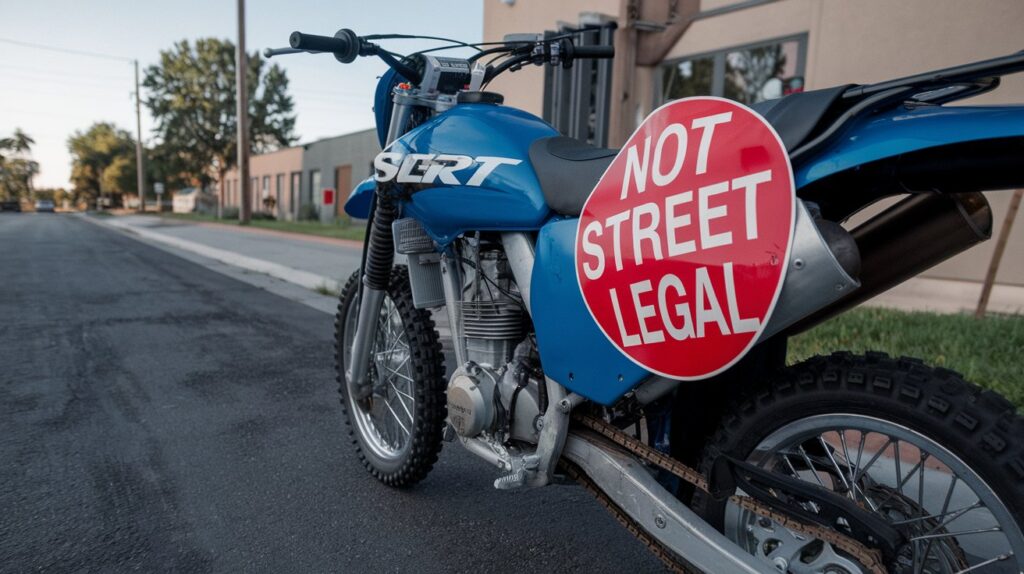
Thinking about riding your dirt bike on city streets but unsure if it’s even possible? You’re not alone.
Many riders wonder, “Can you make a dirt bike street legal? ” The answer might surprise you—it’s easier than you think, but it does take some work. You’ll need to add certain safety features like headlights, turn signals, mirrors, and approved tires.
Plus, there’s paperwork to handle, like getting a title and registration through your local DMV. Stick with me, and I’ll guide you through exactly what you need to do to turn your dirt bike into a street-legal ride you can enjoy every day. Ready to unlock a whole new riding experience? Let’s dive in!
Essential Safety Equipment
Making a dirt bike street legal requires adding essential safety equipment. These items ensure your bike meets road regulations and keeps you safe. Each piece plays a vital role in visibility, communication, and control on public roads.
Below are the key safety components needed for street legality. Installing them correctly helps you pass inspections and ride confidently.
Dot-compliant Lighting
Your dirt bike must have lights that meet Department of Transportation (DOT) standards. This includes a headlight with high and low beams. Tail and brake lights are also required for visibility. Turn signals may be necessary depending on your state’s laws. Proper lighting helps other drivers see you day and night.
Horn And Mirrors
A working horn is essential for alerting others to your presence. At least one rearview mirror is required to monitor traffic behind you. These items improve safety by enhancing your awareness and communication with other road users.
License Plate And Holder
Your bike must have a secure license plate holder. The holder should display your plate clearly and include a light for nighttime visibility. This helps law enforcement identify your bike and confirms it is registered for street use.
Dot-approved Tires
Tires must be approved by the DOT for street riding. Off-road tires lack the tread pattern and durability needed for pavement. Using DOT-approved tires improves traction, handling, and safety on public roads.
Functional Speedometer And Odometer
A working speedometer shows your speed to keep you within legal limits. An odometer tracks the total miles ridden. Both are often required for street legal status. You may need to upgrade your bike’s stator to power these instruments reliably.
Electrical And Exhaust Upgrades
Upgrading the electrical system and exhaust is key to making a dirt bike street legal. These upgrades ensure the bike meets safety and environmental rules. Electrical upgrades support the extra lights and signals needed. Exhaust upgrades help control noise and emissions on public roads.
Stator Upgrade For Power
The stock stator on a dirt bike may not handle extra electrical parts. A stator upgrade provides more reliable power for headlights, turn signals, and brake lights. This keeps all electronics running smoothly without draining the battery. A stronger stator supports safety features required by law. It also helps prevent electrical failures during rides on the street.
Noise And Emission Compliant Exhaust
Dirt bike exhausts are often loud and pollute more than allowed on roads. Installing a noise and emission compliant exhaust reduces sound to legal levels. It controls harmful gases to meet environmental standards. This upgrade is necessary to pass inspections and avoid fines. A compliant exhaust also improves the bike’s overall performance and fuel efficiency.
Federal Minimum Requirements (NHTSA / DOT FMVSS – Applies Nationwide)
The U.S. Department of Transportation sets the baseline safety standards any motorcycle (including converted dirt bikes) must meet to be considered roadworthy. These are the absolute minimum items most states start from:
- DOT-approved tires (highway-speed rated, marked “DOT” on sidewall)
- Headlight (high/low beam, DOT-compliant)
- Tail light + brake light
- Rear reflector (red, visible from 300–500 ft)
- License plate light (illuminates plate at night)
- Horn (audible from 200 ft)
- Rear-view mirror (at least one, usually left side)
- Speedometer (visible, accurate)
- Kickstand (not always mandatory federally, but required in many states)
- Turn signals (not always federally required — many states allow hand signals instead)
- Muffler (must meet noise limits, no straight pipes)
- VIN (must be visible and match title/registration)
If your bike lacks any of these from the factory (most dirt bikes do), you must add them.
Paperwork And Registration
Making your dirt bike street legal involves more than just modifications. Paperwork and registration play a vital role. You must ensure your bike meets legal standards through inspections and proper documentation. This step allows you to ride on public roads without legal issues.
Vin Inspection And Title
Your dirt bike needs a Vehicle Identification Number (VIN) for legal use. Many dirt bikes lack this because they are off-road only. A VIN inspection confirms the bike’s identity and condition. After inspection, you must obtain a title. The title proves ownership and allows registration. Some states require special forms for off-road bike titles. Check local DMV rules for exact steps.
Motorcycle Endorsement
Riding a street-legal dirt bike requires a motorcycle endorsement on your driver’s license. This endorsement shows you passed tests for safe motorcycle operation. Without it, riding on public roads is illegal. The endorsement process usually includes a written test and a riding skills exam. Some states offer training courses to help you pass. Carry your endorsement whenever you ride.
Insurance Requirements
Insurance is mandatory for street-legal dirt bikes in many areas. Liability insurance covers damage or injury you cause to others. Some states require additional coverage like collision or comprehensive insurance. Proof of insurance must be shown during registration. Shop around for the best rates and coverage options. Carry your insurance card on every ride.
Safety Inspection Process
Your dirt bike must pass a safety inspection before registration. Inspectors check for functional lights, horn, mirrors, and brakes. The bike must have DOT-approved tires and meet emission standards. Speedometer and odometer must work properly. The exhaust should meet noise limits. Passing this inspection proves your bike is safe for street use. Some states require annual inspections to keep registration valid.
State Law Variations
State laws vary widely on making a dirt bike street legal. Each state sets its own rules for equipment and registration. Understanding these differences helps you comply and avoid fines.
Some states require more modifications than others. Certain features might be mandatory in one state but optional in another. Knowing the specifics saves time and money.
Checking Local DMV Requirements
Start by visiting your local Department of Motor Vehicles (DMV) website. They list exact rules for street-legal dirt bikes. Look for requirements on lighting, mirrors, and tires.
Some DMVs require inspections before registration. Prepare your bike by adding all necessary parts. You may also need a title or special paperwork for off-road models.
Hand Signal Rules
Several states allow hand signals instead of turn signals. Learn the basic hand signals for turning and stopping. This option may reduce the need for extra lights.
Check if your state accepts hand signals for motorcycles. Some require electric signals regardless. Using hand signals correctly ensures safety and legal compliance.
State-by-State Reality
| State / Region | Can you convert off-road dirt bike to street legal? | Key Requirements / Barriers | Typical Cost Estimate | Difficulty (1–10) |
|---|---|---|---|---|
| Arizona | Yes – very friendly | Lights, mirrors, horn, DOT tires, inspection; no emissions test for most dirt bikes | $800–$2,500 | 3/10 |
| Montana | Yes – one of the easiest states | Lights, tires, plate; no inspection in many counties; temp tags fast | $500–$1,800 | 2/10 |
| Idaho | Yes | Standard lighting + DOT tires; inspection usually required | $700–$2,000 | 4/10 |
| Utah | Yes | Lights, mirrors, horn, DOT tires; emissions test in some counties | $900–$2,500 | 5/10 |
| Nevada | Yes | Standard setup; inspection required in urban areas | $800–$2,200 | 4/10 |
| Colorado | Yes (with restrictions) | Lights + inspection; some counties stricter | $1,000–$3,000 | 6/10 |
| California | No (almost impossible) | CARB emissions certification required — most dirt bikes fail | — | 10/10 |
| New York | No | Strict emissions + equipment rules; most conversions denied | — | 10/10 |
| New Jersey | No | Very restrictive — conversions rarely approved | — | 10/10 |
| Massachusetts | No | Emissions + safety rules block most dirt bike conversions | — | 9/10 |
| Texas | Yes (with work) | Lights, mirrors, horn, DOT tires; inspection + insurance required | $1,000–$3,000 | 6/10 |
| Florida | Yes (limited) | Title, registration, insurance; some counties allow with mods | $800–$2,500 | 5/10 |
Professional Services
Professional services simplify the process of making your dirt bike street legal. Experts handle key steps that require specific knowledge and skills. This saves time and reduces errors. You get a safer, fully compliant bike ready for the road. Trusted professionals guide you from paperwork to installation.
Title And Registration Assistance
Securing a legal title for a dirt bike can be complex. Off-road bikes often lack proper documentation. Professional services help with Vehicle Identification Number (VIN) inspections. They also assist in applying for a title and registration at the DMV. This ensures your bike is legally recognized for street use. Experts explain state laws and prepare all necessary paperwork.
Street Legal Kit Installation
Installing a street legal kit requires technical skill. Professionals fit DOT-approved headlights, taillights, turn signals, and mirrors. They also install a horn, license plate holder, and street tires. Electrical upgrades like stator replacements are done to support added lights. This guarantees your bike meets safety and legal standards. Professional installation avoids common mistakes and delays.
Common Challenges
Making a dirt bike street legal involves several hurdles. These challenges often slow down or stop the process. Understanding these common issues can help you prepare better. It also saves time and money during registration.
Off-road Model Vin Issues
Dirt bikes built for off-road use often lack a proper VIN. Without a VIN, the DMV may refuse to register the bike. Some models have VINs that are hard to verify or do not meet street-legal standards. You might need to get a VIN inspection or apply for a new VIN. This process can be long and costly. It is important to check with your local DMV about VIN requirements early on.
Meeting Emissions Standards
Street-legal dirt bikes must pass emissions tests. Off-road models usually have exhaust systems that do not meet these standards. You may need to replace or modify the exhaust to reduce pollution. Some states have strict rules about noise levels and emissions. Ensuring your bike meets these rules can be challenging. It often requires special parts or professional help. Failing to meet emissions standards will block the registration process.
Frequently Asked Questions
How To Make Your Dirt Bike Road Legal?
Add DOT-approved headlight, taillight, turn signals, horn, mirrors, and street tires. Install a speedometer, license plate holder, and upgrade the stator if needed. Obtain a title, register with the DMV, pass inspection, and get insurance. Check local laws for specific requirements.
Can You Ride A Dirt Bike On The Street Legally?
Riding a dirt bike legally on streets requires making it street legal. Add DOT lights, mirrors, horn, license plate, and street tires. Obtain title, registration, insurance, and pass inspection. Requirements vary by state, so check local DMV rules before riding on public roads.
What Cc Dirt Bike Is Street Legal Without A License?
Dirt bikes under 50cc often qualify as street legal without a license in some states. Always check local laws.
How Much Is Insurance For A Street Legal Dirt Bike?
Insurance for a street legal dirt bike typically costs between $100 and $300 annually. Rates vary by location, rider experience, and coverage type.
Conclusion
Making a dirt bike street legal takes time and effort. You need to add lights, mirrors, and proper tires. Electrical upgrades and a quiet exhaust are also essential. After modifications, pass inspections and handle paperwork at the DMV. Don’t forget to get insurance and a motorcycle license.
Each state has different rules, so check yours carefully. With patience, your dirt bike can become a fun street ride. This process ensures your safety and keeps you legal on public roads.
Disclaimer: The content on this page is for general information only and should not be considered legal advice. We work hard to provide accurate and up-to-date details, but we can't guarantee the completeness or accuracy of the information. Laws and rules change often, and interpretations may vary. For specific advice, always consult a qualified legal expert. We are not liable for any actions you take based on this information. If you spot any errors or outdated content, please contact us, and we’ll update it as soon as possible.