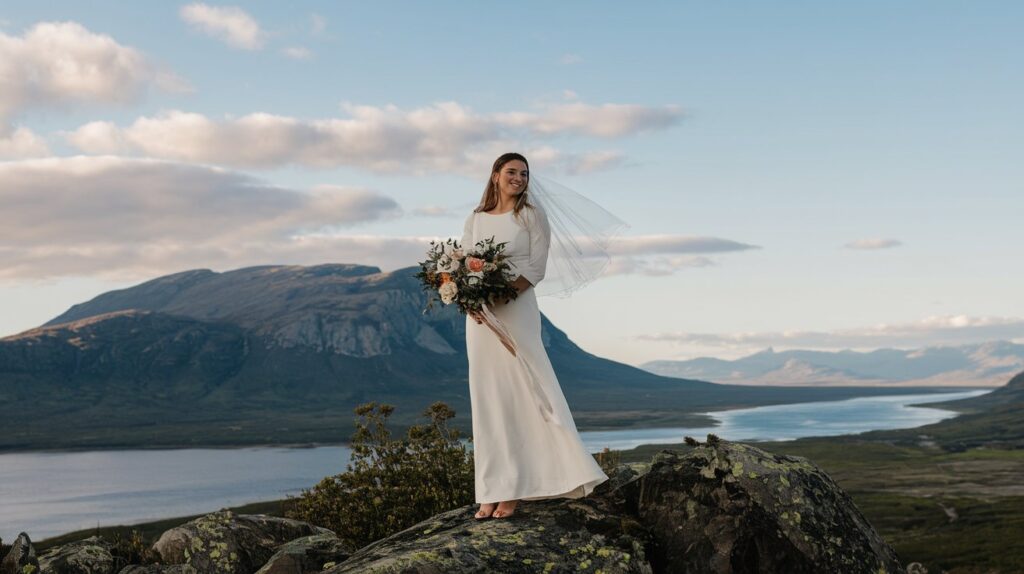
Have you ever wondered if you can marry yourself? It might sound unusual, but self-marriage—also called sologamy—is something people are actually choosing today.
The big question is: can you do it legally? While the idea of marrying yourself feels empowering and symbolic, the laws around it vary depending on where you live. In some places, you can officially perform your own wedding ceremony without an officiant or witnesses, but in others, it’s just a personal celebration without legal weight.
If you want to know exactly where and how self-marriage works, and what steps you’d need to take, keep reading. This guide will clear up the confusion and help you understand if marrying yourself is really an option for you.
Solo Wedding Laws In The USA
Solo weddings, also called sologamy, have gained attention. Many wonder if marrying yourself is legal in the US.
The truth is, sologamy itself has no legal status. No state officially recognizes a solo marriage as legally binding. Yet, some states allow a related practice called self-solemnization.
Self-solemnization lets a person officiate their own marriage. This means they can legally marry their partner without a third-party officiant. A few states have laws supporting this option.
States Allowing Self-solemnization (with Variations)
Colorado and Washington D.C. allow the easiest self-solemnization. No need for witnesses or an officiant.
Pennsylvania requires two witnesses to sign the marriage license. No officiant is needed.
Illinois permits self-uniting marriages only if they follow religious or tribal traditions.
Wisconsin allows self-solemnization but asks couples to sign forms about federal recognition limits.
California offers a “non-clergy” marriage license but requires two witnesses.
Maine, Kansas, and Nevada allow self-solemnization mainly for Quaker or Baha’i faith members.
Key Considerations
- You must get a valid marriage license from the local county.
- Rules and requirements vary by county and can change over time.
- Always check with the local clerk’s office before planning your ceremony.
States Allowing Self-solemnization
Self-solemnization means you can marry yourself without an officiant. Only a few states and Washington D.C. allow this legal option. Each place has different rules and requirements. Some states need witnesses, others do not. Understanding these differences helps you plan your unique ceremony.
Here are some states where self-solemnization is permitted, with key details for each.
Colorado And Washington D.c.
These places offer the most freedom for self-solemnization. Couples can marry without an officiant or witnesses. You just need to get a marriage license from the local clerk. The process is simple and clear. This makes Colorado and D.C. popular for self-marriage.
Pennsylvania
Pennsylvania allows self-uniting marriages but with conditions. Two witnesses must sign the marriage license. They act as legal witnesses instead of an officiant. The couple must apply for a special license. This state makes the process official yet flexible.
Illinois
Illinois permits self-solemnization only for certain religious groups. The ceremony must follow a religious tradition or Native American customs. This rule limits who can self-marry legally. Couples outside these groups need an officiant to marry.
Wisconsin
Wisconsin allows couples to self-marry legally. They sign documents confirming their marriage. The state warns this may cause issues with federal recognition. Despite this, many choose Wisconsin for its self-solemnization option.
California
California offers a “non-clergy” marriage license. Couples must have two witnesses sign the license. This allows self-solemnization without a religious officiant. The witnesses help validate the ceremony legally.
Maine, Kansas, And Nevada
These states allow self-solemnization mostly for specific faiths. The Quaker and Baha’i religions have traditions supporting self-marriage. Couples from these faiths can legally marry without an officiant. Others may need to follow standard marriage rules.
Legal Requirements For Self-marriage
Understanding the legal requirements for self-marriage is essential before planning your ceremony. Laws differ widely across states in the U.S. Some allow self-solemnization, where you can marry yourself without an officiant. Others require witnesses or religious connections to approve the union.
Each state sets clear rules on marriage licenses, witness presence, and religious conditions. These rules determine if your self-marriage is legally valid. Knowing these details helps avoid complications and ensures your marriage is recognized by law.
Marriage Licenses
Obtaining a marriage license is a must for any legal wedding, including self-marriage. You apply at your local county clerk’s office. The license confirms your legal right to marry. The rules for self-solemnization still require this document. Without it, the marriage cannot be legally registered.
Some states offer special licenses for self-marriage. They may have unique forms or fees. Always check what your county requires before applying.
Witnesses And Officiants
Most states that allow self-marriage waive the need for an officiant. You can sign the marriage papers yourself. However, some states require one or two witnesses. These witnesses must watch the ceremony and sign the license.
In states like Pennsylvania and California, witnesses are necessary even if you officiate your own wedding. The witnesses’ signatures make the marriage valid. Without them, the license is incomplete.
Religious Affiliation Conditions
Certain states limit self-marriage to members of specific religious groups. Illinois and Nevada often require a religious affiliation. This rule links self-marriage to faith traditions like Quaker or Baha’i ceremonies.
Religious conditions ensure the marriage fits within a recognized spiritual practice. If you do not belong to these groups, self-marriage may not be legal in those states. Confirm your eligibility based on your faith or community membership.
Differences Between Sologamy And Legal Marriage
Sologamy and legal marriage are two very different concepts. Sologamy means marrying yourself. Legal marriage is a contract between two people recognized by law.
Understanding these differences helps clarify what each involves. Sologamy is more symbolic. Legal marriage has legal rights and responsibilities.
Definition And Recognition
Sologamy is a personal commitment to self-love. It is not recognized by governments or courts. Legal marriage is a formal agreement. It is recognized by law and government agencies.
Legal Rights And Benefits
Legal marriage grants rights like tax benefits, inheritance, and healthcare decisions. Sologamy does not provide these rights. It is a private celebration with no legal effects.
Requirements And Formalities
Legal marriage requires a license, witnesses, and often an officiant. Sologamy has no legal requirements. It can be done anytime, anywhere, without official approval.
Social And Cultural Impact
Legal marriage is widely accepted and understood in society. Sologamy challenges traditional views of marriage. It focuses on self-acceptance rather than partnership.
Social And Personal Motivations
Social and personal motivations play a major role in the choice to marry oneself. This unique decision reflects deep personal values and cultural trends. People seek different reasons to celebrate self-union beyond legal recognition. Understanding these motivations reveals why self-marriage gains attention and respect.
Symbolic Commitment
Marrying yourself acts as a powerful symbol of commitment. It shows dedication to your own happiness and growth. This act marks a milestone in self-awareness and acceptance. It can also stand for independence from societal expectations. People often use this ceremony to honor their journey and personal achievements.
Empowerment And Self-love
Self-marriage promotes empowerment by valuing your own worth. It encourages self-love and confidence in one’s identity. This ritual can heal past wounds and boost mental strength. Many find it freeing to declare love without needing another person. It sends a clear message about the importance of caring for yourself first.
Potential Limitations Of Self-marriage
Self-marriage, or sologamy, attracts interest for its unique personal meaning. Yet, it carries notable legal limits. Understanding these limits helps clarify what self-marriage can and cannot do legally.
Federal Recognition
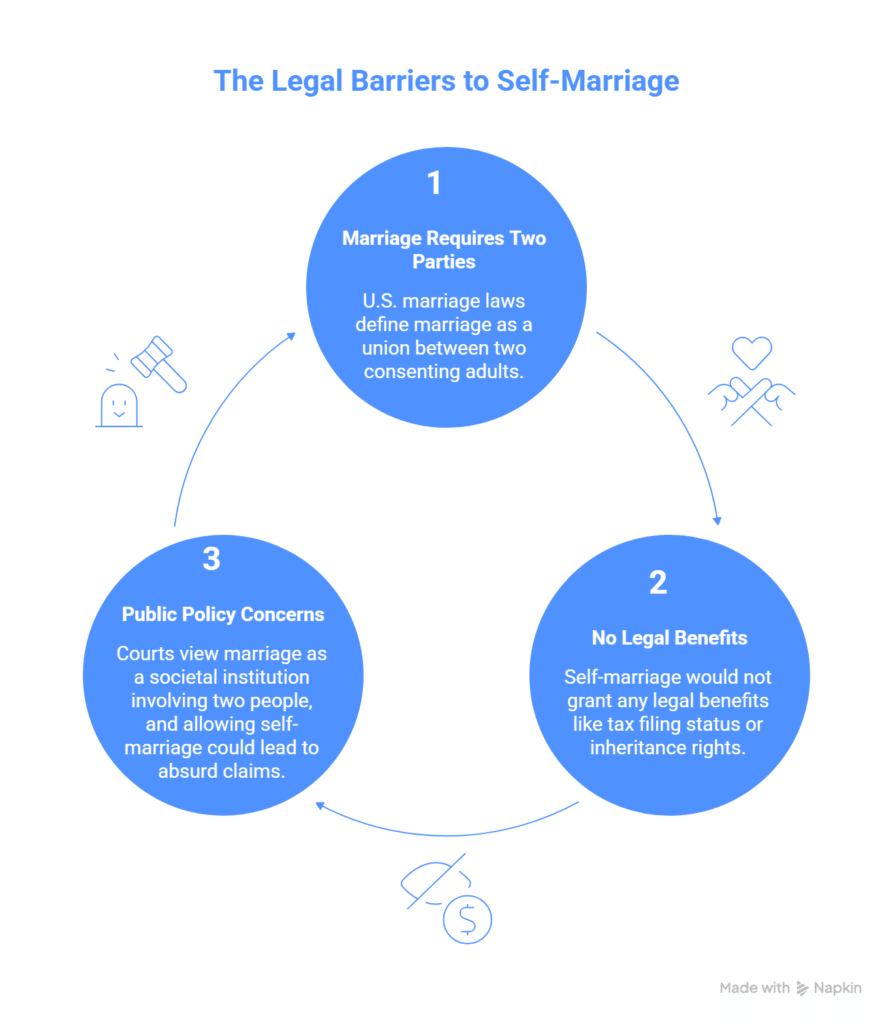
Self-marriage generally lacks federal recognition in the United States. Federal law recognizes marriages between two different people, not self-marriages. This means self-married individuals cannot access federal spousal benefits. Programs like Social Security, tax filing, and immigration do not acknowledge self-marriage. This lack of recognition limits legal protections and rights often linked to marriage.
Legal Benefits And Restrictions
Most states do not grant legal benefits to self-married individuals. Rights like inheritance, medical decision-making, and joint property ownership are often unavailable. Some states permit self-solemnization, but this usually applies to marrying another person without an officiant. These laws do not equate to legally marrying oneself. Self-marriage holds symbolic meaning but rarely offers legal advantages. Couples and individuals should understand these limits before choosing self-marriage.
Where Is Self-Marriage Legal?
Self-marriage is not recognized as a legal marriage in any U.S. state or federal law. The U.S. marriage laws (governed by state statutes and the Fourteenth Amendment) require two consenting parties. Courts have consistently ruled that marriage is a contract between two people (Goodridge v. Department of Public Health, 2003, and subsequent cases affirming marriage as a dyadic union).
However:
- Symbolic self-marriage ceremonies are legal everywhere as a personal event (like a birthday party). You can have a “wedding” to yourself with vows, a ring, and guests — but it has zero legal effect.
- No state or country issues a marriage license for self-marriage.
Globally:
- No country legally recognizes self-marriage as valid for immigration, taxes, inheritance, or benefits.
- India: Some high-profile cases (e.g., Pinki Sonkar in 2022 married herself symbolically), but not legally binding.
- Japan: Symbolic “solo weddings” are a cultural trend, but no legal status.
- Denmark: Known for liberal marriages (even to objects like the Statue of Liberty in one case), but self-marriage remains symbolic only.
Famous Self-Marriage Cases
- Erika Anderson (USA, 2017): Journalist “married” herself in a symbolic ceremony — no legal effect.
- Sophie Tanner (UK, 2015): Held a public self-wedding — purely ceremonial.
- Nandini Bakshi (India, 2022): Symbolic self-marriage for self-love — not registered legally.
- No successful legal cases: Courts worldwide have never upheld self-marriage as binding.
Alternatives to Self-Marriage
If you’re seeking self-commitment or legal protections:
- Symbolic Ceremony: Have a private or public event — perfectly legal and meaningful.
- Legal Documents: Use wills, powers of attorney, or advance directives to protect your wishes (no spouse needed).
- Polygamy or Group Marriage: Illegal in the US (bigamy laws, 18 U.S.C. § 2421 in some contexts).
- Self-Care Rituals: Many therapists recommend “self-marriage” as a therapeutic tool for self-love — no legal barriers.
How To Self-solemnize Legally
Self-solemnization allows a person to marry themselves without an officiant. It is legal only in some U.S. states. Knowing the correct steps helps ensure your marriage is valid.
Follow these guidelines to self-solemnize legally. Understand local rules and complete necessary paperwork. This process makes your self-marriage official.
Step-by-step Process
First, obtain a marriage license from your local county clerk. This license proves you meet the legal requirements to marry.
Next, fill out the license forms carefully. Some states need witnesses to sign. Others do not.
Then, perform your self-solemnization ceremony. Speak your vows aloud. Declare your intent to marry yourself.
Afterwards, sign the marriage license as the officiant and the spouse. Include any witnesses if required.
Finally, return the signed license to the county clerk. This step registers your marriage with the state.
Checking Local Regulations
Self-solemnization laws differ by state and county. Some places require witnesses or religious ties. Others have no such conditions.
Contact your local county clerk’s office before planning. Verify if self-solemnization is allowed and what rules apply.
Check for any recent changes in the law. Each state updates marriage rules at times.
Confirm if you need special forms or permits. Some areas may have unique paperwork.
Understanding local regulations avoids legal problems later. It ensures your self-marriage is recognized.
Cultural Perspectives On Marrying Yourself
Marrying yourself, also known as sologamy, is a unique practice gaining attention worldwide. Different cultures view this act in various ways. Some see it as a bold statement of self-love. Others consider it a spiritual or personal ritual.
In many societies, marriage traditionally involves two people. Marrying oneself challenges this norm. It invites people to rethink love, commitment, and social expectations.
Cultural Acceptance And Traditions
Some cultures embrace sologamy as an expression of independence. It allows individuals to celebrate self-worth without a partner. In others, self-marriage is less accepted and may be seen as unusual or even taboo.
In Japan, self-marriage ceremonies have appeared as a way to honor personal growth. Similarly, in parts of Europe, sologamy is sometimes linked to feminist ideals.
Religious Views On Self-marriage
Religious traditions often focus on marriage as a union between people. Many faiths do not recognize sologamy as a valid marriage. Some may see it as conflicting with their beliefs about partnership and family.
Yet, some spiritual groups encourage self-commitment ceremonies. They view it as a path to inner peace and self-acceptance.
Modern Trends And Social Impact
In recent years, sologamy has grown due to changing social norms. More people prioritize self-care and independence. Social media helps spread awareness and acceptance of marrying oneself.
This trend sparks discussions about personal happiness and societal pressure. It challenges the idea that marriage must involve two people to be meaningful.
Frequently Asked Questions
Is Sologamy Legal In The Us?
Sologamy is not legally recognized in the US. Some states allow self-solemnization, letting couples marry themselves legally.
In What States Can You Get Married By Yourself?
You can self-marry in Colorado, Washington D. C. , Pennsylvania, Illinois, Wisconsin, California, Maine, Nevada, and Kansas. Requirements vary by state.
What Is Self-marriage Called?
Self-marriage is called sologamy. It involves marrying oneself in a personal or public ceremony without a partner.
Can Someone Legally Marry Themself?
Sologamy, or marrying yourself, isn’t legally binding in most places. Some U. S. states allow self-solemnization, letting individuals marry themselves legally. States like Colorado and Washington D. C. permit this without witnesses. Always check local laws and obtain a valid marriage license before proceeding.
Conclusion
Marrying yourself is a unique way to celebrate self-love. Most states do not recognize self-marriage legally. A few places, like Colorado and Washington D. C. , allow self-solemnization with few rules. Others require witnesses or specific religious ties. Always check local laws before planning.
This helps avoid surprises and ensures your ceremony follows the rules. Whether legal or symbolic, marrying yourself can be meaningful. It shows commitment to your own happiness and growth. Celebrate yourself in a way that feels right and true.
Disclaimer: The content on this page is for general information only and should not be considered legal advice. We work hard to provide accurate and up-to-date details, but we can't guarantee the completeness or accuracy of the information. Laws and rules change often, and interpretations may vary. For specific advice, always consult a qualified legal expert. We are not liable for any actions you take based on this information. If you spot any errors or outdated content, please contact us, and we’ll update it as soon as possible.