When someone threatens you, it’s natural to feel scared and unsure about what steps you can take. You might wonder, “Is this serious enough to involve the police?” or “What are my rights in this situation?” Understanding what you can do legally is crucial to protect yourself and your peace of mind.
This article will guide you through the key actions you can take if you face threats, explain what counts as a legal threat, and show you how to respond effectively. Keep reading to learn exactly how to stand up for yourself and stay safe under the law.
Legal Definition Of A Threat
A threat holds a specific meaning in the eyes of the law. It is not just any scary or angry statement. A legal threat involves words or actions that show a clear intent to cause harm or violence. The law looks at how serious the threat is and if it makes a person reasonably fear for their safety.
The context matters. Courts check if a normal person would feel afraid after hearing or seeing the threat. The presence of a weapon or the situation can increase the threat’s seriousness. Not all harsh words qualify as threats under the law.
Key Elements Of A Threat
- Intent: The threatener must intend the statement to be taken as a real threat.
- Communication: Threats can be spoken, written, or sent electronically.
- Specificity: The threat must clearly express serious intent to cause harm soon.
- Fear: The victim must feel a reasonable and lasting fear for their safety.
- Context: The situation and details, like a weapon, affect how credible the threat is.
What Does Not Qualify As A Threat
- Political Hyperbole: Statements made as jokes or political opinions, not real threats.
- Jokes: Comments that a normal person would know are not serious threats.
- Empty Talk: Words said without real intent or ability to cause harm.
Examples Of Criminal Threats
- Sending messages that threaten physical harm to someone.
- Posting threats of violence on social media platforms.
- Making conditional threats like “If you don’t pay, I will hurt you.”
- Threatening a person with a weapon during a heated argument.
Your Essential Legal Rights If Threatened
If someone threatens you, you have these rights under U.S. law:
-
Right to Safety: Protection from harm under the Fourteenth Amendment’s due process clause.
-
Right to Report: File a police report without fear of retaliation.
-
Right to Self-Defense: Use reasonable force if facing imminent harm (varies by state “stand your ground” laws).
-
Right to Protective Orders: Seek court orders restricting contact.
-
Right to Press Charges: Cooperate with prosecutors for criminal charges.
-
Civil Remedies: Sue for damages (e.g., intentional infliction of emotional distress).
Steps To Take After Receiving A Threat
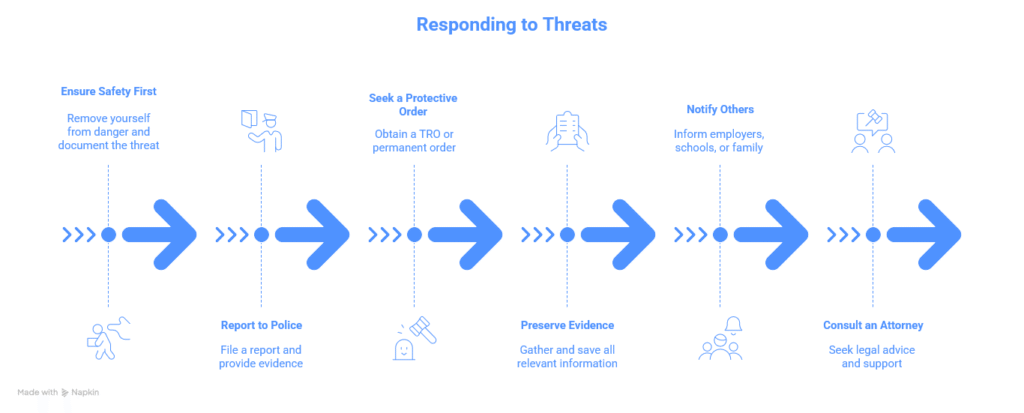
Receiving a threat can be frightening and stressful. Taking the right steps is important to protect yourself and build a strong case. Acting quickly helps ensure your safety and supports any legal action you may need to take.
Follow these key steps after you receive a threat. Each step will help you gather important information and get the right help.
Documenting The Threat
Write down every detail about the threat. Include the exact words used, time, date, and place. Save any messages, emails, or recordings. Use your phone or camera to capture evidence if possible. Keep all documents safe and organized for future reference.
Gathering Witnesses And Evidence
Identify anyone who saw or heard the threat. Ask them to write down what they witnessed. Witness statements add credibility to your case. Collect any physical evidence like photos or videos. The more proof you have, the stronger your position will be.
Reporting To Law Enforcement
Contact the police to report the threat as soon as possible. Share all your documentation and evidence with them. Provide witness names and statements if available. Explain how the threat made you feel and if you fear for your safety. Reporting helps law enforcement act quickly and may prevent further harm.
Filing Charges And Legal Actions
Filing charges and taking legal action are important steps if someone threatens you. These actions help protect your safety and hold the offender responsible. Knowing how to press charges, understanding what counts as assault by threat, and obtaining an order of protection can guide you through the legal process.
How To Press Charges
Start by reporting the threat to the police. Provide clear details about what happened. Give any evidence like messages or recordings. The police will investigate the claim. They decide if there is enough proof to press charges. You may need to give a statement or testify in court. Keep records of all communications with law enforcement. Pressing charges formally begins the legal process against the threatener.
Understanding Assault By Threat
Assault by threat means causing fear of harm without physical contact. The threat must be serious and believable. It can be spoken, written, or shown by actions. The victim must feel scared for their safety. The law protects people from such threats. Not all threats qualify; jokes or vague statements usually do not. Proof of intent and fear is important in these cases. Assault by threat is punishable by law and can lead to arrest.
Obtaining An Order Of Protection
An order of protection is a legal document to keep you safe. It restricts the threatener from contacting or coming near you. You can request it from a court. Provide evidence of the threat and explain your fear. The court reviews your case quickly. If granted, violating the order can result in arrest. This order offers immediate safety and peace of mind. It is a strong tool against ongoing threats or harassment.
Protecting Yourself Legally
Protecting yourself legally is crucial when facing threats. Taking clear steps helps secure your safety and rights. Understanding legal options stops threats from escalating. Acting quickly can prevent harm and provide peace of mind.
When To Contact A Lawyer
Seek a lawyer as soon as you feel unsafe. Lawyers explain your rights and legal options clearly. They guide you through police reports and court processes. Early advice can help build a strong case. A lawyer can also handle communication with the threatener.
Using Restraining Orders Effectively
Restraining orders keep the threatener away from you. File for one at your local court with detailed evidence. The order sets clear boundaries and consequences. Follow court instructions exactly to maintain protection. Carry a copy of the order at all times.
Dealing With Violations Of Protection Orders
Violations of protection orders are serious crimes. Report any breach to the police immediately. Keep records of violations, such as messages or witnesses. Your lawyer can ask the court to enforce stricter penalties. Prompt action discourages further threats or harm.
Rights And Limitations
Understanding your rights and limitations is key when facing threats. The law balances protecting free speech with stopping real danger. Knowing what counts as a threat helps you act wisely. It also shows when the law steps in to keep you safe.
Free Speech Vs. True Threats
Free speech lets people express ideas, even if harsh or unpopular. But it does not cover threats that cause real fear. A true threat means words or actions that intend harm. Courts check if a reasonable person feels unsafe. Jokes, insults, or opinions usually stay protected.
What The Law Protects
The law stops threats that put your safety at risk. It covers threats made by phone, text, or social media. Threats must be clear and serious, not vague or accidental. You have the right to report threats to police. Law enforcement can act if they find danger is real.
Consequences For False Reporting
Making false threat reports can lead to legal trouble. Filing a fake police report wastes resources and harms others. The law may charge you with a crime for lying. Always give honest information when reporting threats. This keeps the system fair and protects everyone.
Resources For Victims
Facing threats can feel overwhelming. Knowing available resources helps victims act confidently. Support networks provide safety, guidance, and legal advice. These resources assist victims in understanding their rights and options.
Support Services In Austin, Texas
Austin offers many local support services for victims of threats. Crisis centers provide counseling and emergency shelter. Victims can find help through community outreach programs. Local law enforcement also connects victims to resources and protection orders. These services focus on safety and recovery within the Austin area.
National Hotlines And Agencies
National hotlines offer immediate help 24/7. Victims can call to speak with trained counselors. These hotlines provide crisis support and safety planning. Agencies like the National Domestic Violence Hotline serve victims nationwide. They also guide victims to local services and legal assistance.
Legal Aid And Advocacy Groups
Legal aid groups help victims understand their rights. They offer free or low-cost legal advice. Advocacy groups support victims through court processes. These organizations help with restraining orders and protection plans. They work to ensure victims receive fair treatment under the law.
Self-Defense Considerations
- Use Reasonable Force: Only if facing imminent harm; excessive force can lead to charges.
- Stand Your Ground: In states like Florida (Fla. Stat. § 776.012), no duty to retreat.
- Castle Doctrine: Protects home defense in most states.
Warning: Never escalate—prioritize de-escalation and legal channels.
Special Situations
- Online/Cyber Threats: Report to platforms and law enforcement; federal laws cover digital threats.
- Workplace Threats: Notify HR; OSHA protects whistleblowers.
- Domestic Violence: Immediate 911 call; specialized orders available.
- Minors: Additional child protection laws apply.
Practical Tips
- Safety Plan: Identify safe places, emergency contacts, and escape routes.
- Documentation: Keep a threat journal with details.
- Support Resources: National Domestic Violence Hotline (1-800-799-7233) or local victim services.
- Avoid Engagement: Do not respond to threats—block and report.
- Legal Aid: Free services via Legal Aid Society or state bar associations.

Frequently Asked Questions
Should You File A Police Report If Someone Threatens You?
Report threats to the police to document them for legal protection. Verbal threats may lead to future legal actions. Immediate danger or weapons increase urgency. Police involvement helps ensure your safety and builds evidence if harm occurs. Always prioritize your security by notifying authorities promptly.
What Legally Is Considered A Threat?
A legal threat expresses intent to cause unlawful harm, causing reasonable fear for safety. It must be clear, specific, and credible, considering context like weapons or imminent danger. Jokes or political hyperbole don’t count as threats under the law.
How To Press Charges Against Someone Who Threatens You?
Document the threat with details and evidence. Report it immediately to the police. Provide witness information if available. Cooperate fully during the investigation. Consult a lawyer to understand your legal options.
How To Prove A Verbal Threat?
Prove a verbal threat by documenting the date, time, exact words, and context. Gather witness statements and report to police promptly.
Conclusion
Taking legal steps after a threat protects your safety and rights. Report threats to police quickly and clearly. Keep detailed records of all threatening messages or actions. Stay calm and seek support from trusted people. Knowing your legal options helps you feel empowered and secure.
Remember, the law aims to keep you safe from harm. Act wisely and protect yourself without delay.
References
- Virginia v. Black, 538 U.S. 343 (2003).
- Watts v. United States, 394 U.S. 705 (1969).
- 18 U.S.C. § 875 (Interstate Threats, 2026).
- National Domestic Violence Hotline
- U.S. Department of Justice.
Disclaimer: The content on this page is for general information only and should not be considered legal advice. We work hard to provide accurate and up-to-date details, but we can't guarantee the completeness or accuracy of the information. Laws and rules change often, and interpretations may vary. For specific advice, always consult a qualified legal expert. We are not liable for any actions you take based on this information. If you spot any errors or outdated content, please contact us, and we’ll update it as soon as possible.