Did you know that in some U. S. states, it’s perfectly legal for adults to ride in the bed of a pickup truck—while in others, even a quick trip could result in hefty fines? Whether you’re reminiscing about childhood adventures or considering the practicality of transporting passengers, understanding the legal landscape is crucial.
In this article, you’ll gain a clear, authoritative insight into the laws governing truck bed passengers, with a special focus on Austin, Texas, and how regulations vary dramatically from state to state. Drawing on up-to-date legal sources and state guidelines, we break down where and when riding in a truck bed is allowed, outline the specific restrictions for minors and adults, and highlight the penalties and safety concerns involved.
You’ll also discover exceptions for agricultural work, parades, and emergencies, and learn why checking with your local Department of Motor Vehicles (DMV) or Department of Transportation (DOT) is essential. By the end, you’ll be equipped with actionable knowledge to keep your travels both legal and safe, whether you’re in Texas or beyond.
Introduction: Understanding Truck Bed Riding Laws
As of March 2026, only 20 states allow adults to ride in the open bed of a truck under certain conditions, while 30 states prohibit it outright for adults (with exceptions for farms, parades, emergencies, or slow speeds). Children face even stricter rules — many states ban kids entirely or limit them to very young ages with restraints.
Why This Topic Matters
Truck bed riding laws have gained renewed attention as states continue to update regulations to address safety concerns and changing transportation habits. According to the Insurance Institute for Highway Safety, unrestrained passengers in truck beds are three times more likely to suffer fatal injuries in the event of a crash compared to those inside the cab. As pickup trucks remain popular for both work and leisure, understanding these laws is essential for drivers, parents, and employers. Recent data from the U.S. Department of Transportation highlights that over 1,000 injuries occur annually from accidents involving passengers riding in truck beds, underscoring the importance of legal compliance and safety awareness (IIHS).
Adults (18+): Legal in about 20 states (with restrictions); illegal in 30 states.
Children: Almost universally restricted or banned; many states prohibit anyone under 18 (or 12/16) in the bed. Common exceptions (even in strict states): Farm/ranch use, parades, emergencies, slow speeds (<15–25 mph), or enclosed beds with restraints.
Common Myths And Misconceptions
Many people mistakenly believe that truck bed riding is universally legal or that it is always permitted on rural roads. In reality, laws vary drastically by state, age group, and road type. Some common myths include:
- Myth 1: “It’s legal everywhere if you’re an adult.”
*Fact:* States like New York, New Jersey, and Arkansas strictly prohibit truck bed riding for all ages, except for emergencies or official events.
- Myth 2: “Truck bed riding is allowed during parades or farm work.”
*Fact:* While some states provide exceptions for parades or agricultural use, these exemptions are not universal.
- Myth 3: “No law means it’s automatically safe or permitted.”
*Fact:* Lack of specific state laws does not remove liability or risk. Civil penalties and insurance issues can still arise (Wikipedia).
For a breakdown of state-by-state rules, see our detailed comparison in Riding in Truck Bed Laws by State.
Who This Guide Is For (beginner To Advanced)
This comprehensive guide is designed for:
- Truck Owners: Individuals seeking clarity on legal responsibilities and safe practices.
- Parents: Those concerned about child passenger safety and legal age restrictions.
- Employers: Businesses using pickup trucks for work purposes, especially in construction, agriculture, or landscaping.
- Recreational Users: Campers, sports enthusiasts, and parade organizers needing to navigate exceptions.
Whether you are new to pickup ownership or managing a fleet of work trucks, understanding nuanced regulations helps you avoid costly fines and ensure passenger safety. For those interested in broader vehicle safety topics, see our article on Pickup Truck Safety Tips.
By dispelling myths and clarifying current laws, this guide aims to empower readers with up-to-date, actionable information for 2024.
State-by-state Legal Overview
Riding in the bed of a truck is a practice governed by a patchwork of state laws across the United States. Understanding these legal differences is essential for both drivers and passengers to avoid fines and ensure safety.
States Where Riding Is Legal
In several states, there are no specific laws prohibiting riding in the bed of a pickup truck. Examples include Alabama, Alaska, Montana, and South Dakota. These states prioritize individual discretion and do not impose age restrictions or mandatory safety equipment. According to the Wikipedia overview of pickup truck bed laws, nearly 15 states have minimal or no regulations on this practice.
- Arizona — Yes, if 18+ and bed has restraints or cover.
- Arkansas — Yes, if 18+.
- Idaho — Yes, if 18+.
- Illinois — Yes, if 18+ and bed has side rails or restraints.
- Indiana — Yes, if 18+.
- Kansas — Yes, if 18+.
- Kentucky — Yes, if 18+.
- Montana — Yes, no age limit (but recommended restraints).
- Nebraska — Yes, if 18+.
- New Mexico — Yes, if 18+.
- North Dakota — Yes, if 18+.
- Oklahoma — Yes, if 18+.
- South Dakota — Yes, no age limit.
- Texas — Yes, if 18+ (or 13+ with restraints in some cases).
- Utah — Yes, if 18+.
- Vermont — Yes, if 18+.
- Wyoming — Yes, no age limit.
States With Restrictions Or Conditions
Many states allow riding in the truck bed, but impose specific conditions, often based on age, road type, or safety requirements. For example:
- California — Illegal for anyone under 18; adults only in emergencies or slow farm use.
- Colorado — Illegal for anyone under 18; adults restricted.
- Florida — Illegal for anyone under 18; adults only in slow farm/parade use.
- Georgia — Illegal for anyone under 18.
- Hawaii — Illegal for anyone.
- Iowa — Illegal for anyone under 18.
- Louisiana — Illegal for anyone under 12.
- Maine — Illegal for anyone under 18.
- Maryland — Illegal for anyone under 16.
- Massachusetts — Illegal for anyone under 18.
- Michigan — Illegal for anyone under 18.
- Minnesota — Illegal for anyone under 18.
- Missouri — Illegal for anyone under 16.
- Nevada — Illegal for anyone under 18.
- New Jersey — Illegal for anyone under 18.
- New York — Illegal for anyone under 18.
- North Carolina — Illegal for anyone under 12.
- Ohio — Illegal for anyone under 18.
- Oregon — Illegal for anyone under 18.
- Pennsylvania — Illegal for anyone under 18.
- Rhode Island — Illegal for anyone under 18.
- South Carolina — Illegal for anyone under 15.
- Tennessee — Illegal for anyone under 18.
- Virginia — Illegal for anyone under 16.
- Washington — Illegal for anyone under 13.
- West Virginia — Illegal for anyone under 18.
- Wisconsin — Illegal for anyone under 16.
Some states also mandate that truck bed passengers must use restraints or only ride during daylight hours. For a detailed breakdown of restrictions, see Pickup Truck Bed Safety Laws.
Key Exceptions And Special Circumstances
Most states with restrictions make exceptions for specific circumstances:
- Agricultural Use: Many states allow farm workers to ride in truck beds during work-related activities.
- Parades and Emergencies: Special permissions are often granted for parades, festivals, or emergency transport.
- Rural Roads: Some states relax laws for rural or less-trafficked routes.
For a comprehensive comparison, see the table below:
| State | Legal Status | Age Restrictions | Common Exceptions |
|---|---|---|---|
| Alabama | Legal | None | None |
| Florida | Restricted | Under 18 | Agricultural, Parades |
| New York | Illegal | All ages | Emergencies, Parades |
| Texas | Restricted | Under 18 | Rural roads, Parades |
| Montana | Legal | None | None |
For more on state-specific laws and safety practices, visit the Governors Highway Safety Association resource. Always check your local regulations before riding in a truck bed, as laws are subject to change and enforcement varies by jurisdiction.
Detailed Analysis Of State Laws
Navigating the legality of riding in the bed of a truck in the United States requires a nuanced understanding of diverse state regulations. While federal law does not directly prohibit this practice, individual states set stringent rules that vary widely by age, road type, and specific use cases.
Age-based Restrictions
Most states impose age-based restrictions to protect minors. For instance, Texas allows passengers over the age of 18 to ride in truck beds, but strictly prohibits children under 18 unless an exception applies. In contrast, California bans anyone under 18 from riding in a truck bed unless secured by federally approved restraints. According to the Insurance Institute for Highway Safety, over 30 states restrict truck bed passengers based on age, with penalties ranging from fines to license points.
For more in-depth safety statistics, visit the IIHS Fatality Statistics.
Roadway Type And Use Case Restrictions
State laws also consider roadway type. High-speed highways and interstates often prohibit truck bed passengers due to increased accident risk. For example, Georgia allows truck bed riding only on roads with speed limits below 35 mph, while Nevada restricts it on highways but permits it within residential areas.
Enforcement is stricter in urban locations, aiming to minimize fatalities and injuries.
Agricultural, Work, And Parade Exceptions
There are notable exceptions for agricultural, work, and parade contexts. States like Oklahoma and Alabama permit truck bed riding for farm workers during field transport, and many states allow passengers during parades or official events. These exceptions acknowledge the operational needs of rural communities and special events.
For details on state-specific exceptions, consult your local State DMV Guide.
Recent Legal Updates And Changes
Legal trends show a gradual tightening of regulations. In 2023, Arkansas updated its law to ban truck bed riding for minors except during emergencies and parades. Similarly, New York and New Jersey have reinforced prohibitions except for official or emergency uses.
These changes reflect growing concern over passenger safety and are often accompanied by public awareness campaigns.
Data Visualization: State Law Breakdown
Below is a comparative HTML table summarizing key state regulations. The trend indicates that most states with high urban density and accident rates impose stricter laws.
| State | Min. Age | Highway Restriction | Exceptions |
|---|---|---|---|
| Texas | 18 | Banned | Work, Parades |
| California | 18 | Banned | Secured restraint |
| Georgia | 15 | Speed limit < 35 mph | Work, Parades |
| Alabama | None | None | Agricultural |
| New York | All ages banned | Banned | Emergency, Parade |
For further insights on the risks and legal consequences, see our Truck Bed Safety Laws Guide and the Wikipedia: Seat Belt Law. Understanding your state’s specific laws is crucial for safe and legal travel practices.
Risks And Safety Considerations
Riding in the bed of a truck presents significant safety risks, regardless of local laws. Understanding the dangers, accident statistics, and best practices is crucial for making informed decisions and protecting passengers.
Accident Data And Injury Statistics
Data from the National Highway Traffic Safety Administration (NHTSA) highlights the increased risk for individuals riding in open truck beds. According to the NHTSA, over 200 fatalities and thousands of injuries occur annually in the United States from accidents involving passengers in pickup truck beds. Children and teens are particularly vulnerable, accounting for a disproportionate number of incidents. The Centers for Disease Control and Prevention (CDC) also report that unrestrained passengers in cargo areas are at least three times more likely to be ejected during a crash compared to those inside the cab (CDC Motor Vehicle Safety).
Common Safety Hazards
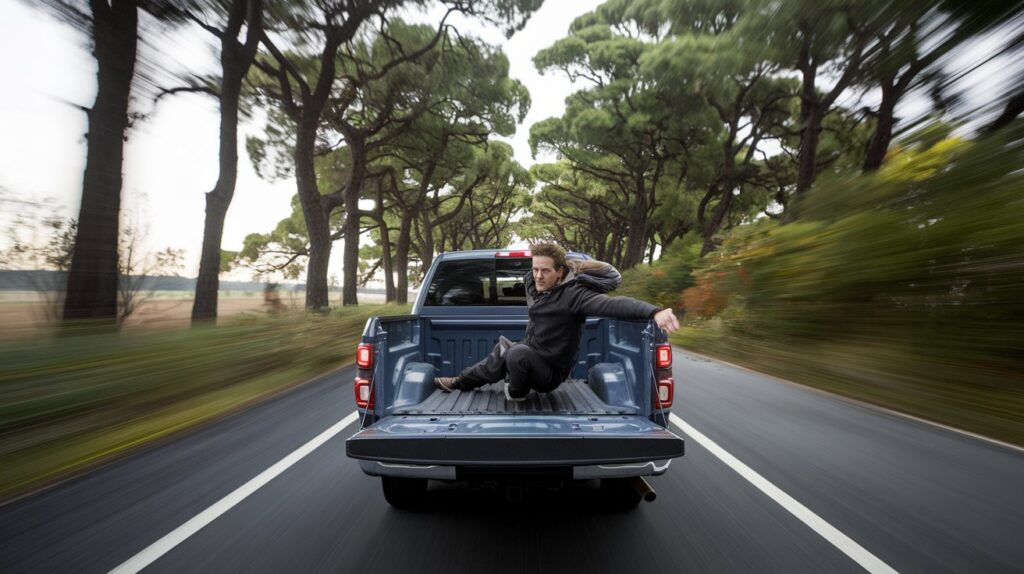
Passengers riding in truck beds face unique hazards that are often underestimated. Key risks include:
- Ejection during collisions or sudden stops: Without seatbelts or restraints, even minor impacts can throw riders from the vehicle.
- Exposure to road debris and weather: Riders are unprotected from flying rocks, dust, and inclement weather.
- Falling from the vehicle: Sharp turns, rough terrain, or distracted driving can cause passengers to lose balance and fall.
- Limited visibility and driver awareness: Drivers may not be able to see or communicate with riders in the bed, increasing danger during maneuvers.
These hazards are compounded on highways and busy roads, where higher speeds amplify the risk of severe injury or death.
Protective Measures And Best Practices
While riding in truck beds is inherently risky, certain steps can reduce—but not eliminate—potential harm:
- Follow all local laws and age restrictions: Many states prohibit minors from riding in truck beds; always check your state’s DMV regulations for current rules (Wikipedia: Truck Bed Passenger Laws).
- Limit travel to low-speed, short-distance trips: Avoid highways or areas with heavy traffic.
- Use protective gear: Encourage helmets or padding, especially for younger riders.
- Never overload the truck bed: Maintain a safe passenger count and secure loose cargo.
- Educate riders on risks and safe behavior: Awareness reduces the likelihood of dangerous actions.
For more on legal and practical issues, see our guide on Pickup Truck Bed Safety Tips and explore related coverage on state truck bed laws.
Ultimately, most safety experts and organizations strongly discourage riding in truck beds due to the high risk of injury. Responsible drivers should always prioritize passenger safety over convenience.
Comparison Table: State Laws And Penalties
Comprehensive State Law Comparison
State laws regarding riding in the bed of a truck vary dramatically across the United States, with some states permitting it under specific circumstances and others enforcing strict prohibitions. For example, states like Alabama, Alaska, and Montana have no explicit regulations, while states such as California and New York impose comprehensive bans except for limited exemptions. These differences are crucial for drivers and passengers to understand, as compliance is not only a matter of legal responsibility but also personal safety. For a detailed overview of truck bed laws, consult the Wikipedia: Truck Bed Passenger Laws.
| State | General Law | Penalties | Age Restrictions | Special Circumstances |
|---|---|---|---|---|
| Texas | Allowed for 18+; minors prohibited except for parades/emergencies | Up to $200 fine (first offense) | Under 18 banned | Parades, emergencies |
| California | Generally prohibited | $100–$250 fine | All ages banned | Farm work, parades |
| Florida | Allowed for 18+; restricted for minors | $60–$100 fine | Under 18 restricted | Highways banned for minors |
| New York | Prohibited except for emergencies | $100–$150 fine | All ages banned | Emergencies only |
| Alabama | No specific law | N/A | No restriction | N/A |
Penalties For Violations By State
Penalties for violating truck bed passenger laws range from warnings to significant fines. In Texas, first-time offenders may face fines up to $200, while California and New York impose penalties between $100 and $250. Repeat violations can result in increased fines or points on your driving record. These consequences highlight the importance of adhering to local laws to avoid unnecessary legal trouble. For further details, refer to the NHTSA Child Safety Guidelines.
Age And Circumstance-based Differences
Many states differentiate based on age and the context of travel. Typically:
- Minors (under 18) face stricter regulations; in Texas and Florida, they are prohibited on highways or entirely unless involved in parades or emergencies.
- Adults may ride in truck beds in several states, but even then, restrictions apply on interstates or high-speed roads.
- Special circumstances such as agricultural work, official parades, or emergencies often provide exemptions.
Understanding these nuances ensures responsible and legal transportation. For more on vehicle passenger safety, explore our guide on Truck Bed Passenger Safety Tips or read about state-specific truck bed laws for detailed local information.
Enforcement And Real-world Scenarios
How Laws Are Enforced
Law enforcement agencies across the United States take the issue of riding in the bed of a truck seriously due to the significant safety risks involved. Officers typically monitor for violations during routine patrols, traffic stops, and especially at highway checkpoints.
The enforcement intensity varies by state and local jurisdiction. For example, in Texas, state troopers often cite drivers under Texas Transportation Code §545. 414 if minors are found riding unsecured in a truck bed.
Statistics from the National Highway Traffic Safety Administration (NHTSA) indicate that more than 200 people are killed and thousands are injured annually in incidents involving passengers riding in truck beds. These alarming figures drive stricter enforcement in states with higher rates of such accidents (NHTSA).
Recent Case Studies And Notable Incidents
Several high-profile cases have underscored the dangers and legal consequences of riding in a truck bed. In 2022, a Texas family faced serious injuries when their pickup, carrying three children in the bed, was rear-ended on the highway. The incident led to criminal charges for the driver and renewed local calls for tougher enforcement.
Another notable case occurred in Florida, where a driver was fined $166 and cited for allowing teens to ride unrestrained in the bed during a spring break event. These real-world scenarios highlight not only the legal risks but also the potential for severe injury or death—especially among minors (Wikipedia: Pickup Truck).
What Happens If You’re Caught
Consequences for violating truck bed passenger laws can vary, but often include:
- Fines ranging from $100 to $500, depending on state and circumstances
- Points added to the driver’s license
- Mandatory court appearances in cases involving minors or repeat offenses
- Potential child endangerment charges if minors are involved
In some jurisdictions, repeat offenders may face increased penalties or license suspension. These legal repercussions are compounded by possible civil liability if an accident occurs. For a deeper look at state-specific regulations, see our guide on state-by-state truck bed laws.
Ultimately, enforcement actions aim to reduce preventable injuries and fatalities. For a broader understanding of passenger safety and legal responsibilities, visit our article on vehicle passenger safety laws.
Expert Insights And Legal Advice
Understanding whether you can legally ride in the bed of a truck requires more than just a glance at local statutes—it demands professional interpretation, law enforcement perspective, and safety expertise. Below, we explore authoritative viewpoints to help you make informed decisions.
Legal Perspectives From Attorneys
Legal experts emphasize that truck bed passenger laws vary dramatically by state and jurisdiction. For example, Texas allows passengers in the truck bed with certain age restrictions, while states like New York and New Jersey generally prohibit this practice except for emergencies or parades.
According to attorney Jesse Hernandez, violations can result in fines ranging from $25 to $200 per incident, and repeated offenses may lead to increased penalties or even misdemeanor charges.
Key considerations attorneys highlight include:
- Age restrictions: Many states prohibit minors under 18 from riding in truck beds.
- Road type: Some laws only apply on highways or interstates.
- Situational exceptions: Agricultural use, parades, or emergencies may be exempt.
For up-to-date legal information, consult your state’s Department of Transportation or refer to comprehensive overviews such as Wikipedia’s Pickup Truck Bed Passenger Laws.
Advice From Law Enforcement
Law enforcement agencies stress that safety and compliance should be your top priorities. Officers frequently encounter cases where passengers are injured or ejected from truck beds during accidents. Data from the National Highway Traffic Safety Administration (NHTSA) shows that truck bed passengers are three times more likely to suffer fatal injuries compared to those inside the cab.
Police advise:
- Always check local laws before transporting passengers in a truck bed.
- Use designated restraints if available.
- Avoid high-speed roads and highways.
For detailed statistics and law enforcement guidance, see the NHTSA Occupant Protection resource.
Safety Recommendations From Transportation Experts
Transportation specialists consistently warn about the significant risks associated with riding in an open truck bed. Studies reveal that over 47% of truck bed accidents result in serious injuries, including head trauma and fractures. Experts recommend never allowing children or unrestrained adults to ride in cargo areas.
Recommended precautions include:
- Limiting truck bed passengers to specific, permitted scenarios (e.g., agricultural work).
- Ensuring proper supervision and communication with passengers.
- Considering safer alternatives, such as using additional seating in the cab.
For more on related transportation safety topics, visit our guide on Safe Truck Passenger Practices.
By combining legal counsel, law enforcement input, and expert safety advice, you can better navigate the complexities and responsibilities of truck bed transportation. For a broader state-by-state breakdown, refer to our resource on Pickup Truck Bed Laws Across the U.S..
How To Check Your Local Laws
Laws about riding in the bed of a truck vary widely by state and even by municipality. For example, in Texas, minors under 18 are generally prohibited from riding in the truck bed on public roads, with some exceptions for parades or emergencies.
Meanwhile, states like Alabama and Alaska have no specific restrictions for adults. The most reliable way to verify current regulations is to consult your state’s official Department of Motor Vehicles (DMV) or Department of Transportation (DOT) website.
For more details on specific state laws, see our guide: State-by-State Truck Bed Laws.
Alternatives For Safe Passenger Transport
Riding in the bed of a truck is significantly more dangerous than riding inside the cab. According to the National Highway Traffic Safety Administration (NHTSA), passengers in truck beds are 8 times more likely to be ejected during a crash, often resulting in severe injury or fatality.
Consider these safer alternatives:
| Alternative | Safety Benefit | Legal Compliance |
|---|---|---|
| Riding inside the cab | Seat belts and airbags provide protection | Meets all passenger safety laws |
| Using a second vehicle | Prevents overloading and crowding | Ensures everyone is in a legal seat |
| Public transportation or rideshare | Professional drivers, regulated vehicles | Fully compliant with local laws |
Learn more about pickup truck safety tips for both drivers and passengers.
What To Do If Pulled Over
If law enforcement stops you for transporting passengers in a truck bed, remain calm and respectful. Provide your driver’s license, registration, and insurance as requested. If you were unaware of the law, explain your situation politely—some officers may issue a warning, but fines or citations are also possible
In 2021, over 6,000 citations were issued nationwide for illegal truck bed riding, highlighting the importance of staying informed (NHTSA).
Frequently Asked Questions
Is It Legal To Ride In The Bed Of A Truck In Texas?
In Texas, adults are generally allowed to ride in the bed of a pickup truck, as there is no law explicitly prohibiting it for those over the age of 18. However, Texas law (Transportation Code Section 545. 414) restricts children under 18 from riding in the open bed unless specific exceptions apply, such as during parades or emergencies.
Local ordinances may impose additional rules, so always verify with city or county regulations. Safety is a major concern—studies show truck bed passengers are much more likely to be injured in accidents, so use caution even where legal.
—
What States Allow Riding In The Bed Of A Pickup Truck?
States like Alabama, Alaska, Montana, Idaho, and Wyoming have no specific laws prohibiting riding in the bed of a pickup truck. In these states, adults can legally ride in truck beds, but minors may face restrictions. Some states, such as Florida and Nevada, allow truck bed passengers with age or seatbelt requirements.
Conversely, states like New York, New Jersey, and Arkansas largely prohibit the practice, except for official events or emergencies. Always consult your state’s DMV or DOT website for the most current regulations before riding in a truck bed.
—
Are There Age Restrictions For Riding In A Truck Bed?
Yes, many states impose age restrictions for riding in the bed of a truck. For example, Texas law prohibits children under 18 from riding in a truck bed, with exceptions for certain circumstances like parades or emergencies. In Florida, minors under 18 are generally barred from riding in the bed unless the truck is traveling under 25 mph or for work-related reasons.
These laws aim to protect young passengers, who are at higher risk of injury in crashes. Always review your state’s specific regulations regarding age limits.
—
What Are The Risks Of Riding In A Truck Bed?
Riding in a truck bed is significantly more dangerous than riding inside a vehicle. According to the National Highway Traffic Safety Administration (NHTSA), passengers in truck beds are at a much higher risk of being ejected in a crash, leading to severe injuries or fatalities.
Truck beds lack seat belts and crash protection. Data shows that from 2010 to 2020, hundreds of deaths and thousands of injuries occurred annually in the U. S. due to truck bed riding. Even where legal, safety experts strongly discourage the practice.
—
Can You Get A Ticket For Riding In A Truck Bed?
Yes, you can receive a citation for riding in a truck bed if you violate local or state laws. For instance, in Texas, a driver can be fined up to $200 for allowing a minor to ride in the bed.
In states where the practice is illegal or restricted, penalties can include fines and points on your driving record. Law enforcement may also cite drivers for reckless endangerment if an accident occurs. Always check your state and local laws to avoid legal trouble.
—
Are There Exceptions For Riding In A Truck Bed During Parades Or Emergencies?
Many states, including Texas, provide exceptions for riding in a truck bed during parades, emergencies, or agricultural work. For example, Texas law allows minors to ride in truck beds if participating in a parade or in case of an emergency.
Some states extend exceptions for work-related transport, such as on farms or construction sites. However, these exceptions are narrowly defined, and outside these scenarios, standard restrictions apply. Always confirm the legal exceptions with your local authorities.
—
Do Seatbelt Laws Apply To Truck Beds?
Generally, seatbelt laws do not apply to passengers in the bed of a pickup truck, as most truck beds are not equipped with seat belts. However, some states require restraints or prohibit passengers entirely in truck beds to mitigate injury risk.
For instance, Nevada allows passengers in truck beds only if the truck is equipped with approved seat belts. The absence of seat belts makes truck bed riding highly unsafe and increases the likelihood of ejection in a crash.
—
Is It Legal To Ride In The Bed Of A Truck On Highways?
Most states restrict riding in the bed of a truck on highways due to higher speeds and increased safety risks. For example, California prohibits riding in truck beds on highways unless certain safety measures are met. Florida only allows truck bed passengers on highways if the truck travels under 25 mph.
These restrictions are designed to reduce fatalities, as highway accidents involving truck beds often result in severe injuries. Always check your state’s specific highway regulations before riding.
—
How Can I Find My State’s Truck Bed Laws?
To find your state’s laws regarding truck bed passengers, visit your state’s Department of Motor Vehicles (DMV) or Department of Transportation (DOT) website. These sites provide official, up-to-date regulations and may include FAQs, charts, or downloadable guides. You can also consult legal resources or contact local law enforcement for clarification.
Laws are frequently updated, so verify the latest requirements before riding in a truck bed to avoid fines and ensure safety.
—
What Should I Do If Injured While Riding In A Truck Bed?
If you are injured while riding in a truck bed, seek medical attention immediately. Document the incident and gather witness statements. You may have legal options for compensation, depending on the circumstances and state laws. In Texas, for example, injured parties can pursue personal injury claims if negligence is involved.
Consult a personal injury attorney to understand your rights and potential claims. Reporting the incident to law enforcement and your insurance provider is also recommended.
Conclusion
In summary, the legality of riding in the bed of a truck varies widely across the United States, with some states permitting it under specific conditions, while others enforce strict prohibitions—especially for minors and on highways. Texas, for example, allows adults to ride in truck beds but imposes restrictions for children.
The most crucial takeaway is that laws are highly nuanced and can change frequently, so always consult your state’s Department of Motor Vehicles or Department of Transportation for the latest regulations before making any decisions. As an actionable step, prioritize safety by considering alternative transportation methods and using proper restraints where permitted.
Remember, legal does not always mean safe—every choice carries risks. Before hopping into a truck bed, ask yourself: is convenience worth compromising safety? Stay informed, obey the law, and advocate for responsible road behavior to protect yourself and others.
Disclaimer: The content on this page is for general information only and should not be considered legal advice. We work hard to provide accurate and up-to-date details, but we can't guarantee the completeness or accuracy of the information. Laws and rules change often, and interpretations may vary. For specific advice, always consult a qualified legal expert. We are not liable for any actions you take based on this information. If you spot any errors or outdated content, please contact us, and we’ll update it as soon as possible.