Are you 17 and wondering if you can legally move out on your own? It’s a big question with serious consequences, and the answer isn’t as simple as just packing a bag and leaving.
You might feel ready for independence, but the law has specific rules about when and how you can live apart from your parents. Before you make any decisions, it’s crucial to understand your rights, what the law says about minors moving out, and the options available to you.
Keep reading to discover the key facts you need to know, how you might legally move out at 17, and the steps you should take to protect yourself and your future. Don’t risk your safety or legal trouble—get informed now.
Legal Age To Move Out
Understanding the legal age to move out is important for teenagers and their families. The law sets rules about when a person can leave home without permission. These rules help protect minors and ensure their safety. In many places, including Texas, the age and conditions for moving out are clear and strict.
Minors under 18 often cannot legally move out on their own. This means a 17-year-old usually needs permission or special legal status to live independently. Knowing the specific laws in your state helps avoid trouble and unsafe situations.
Age Restrictions In Texas
In Texas, the legal age to move out without parental consent is 18. Minors younger than 18 are considered children under the law. They must live with their parents or legal guardians unless a court says otherwise. Texas law does not allow 17-year-olds to move out freely.
Parental Custody Rules
Parents have the legal right to decide where their children live. This right continues until the child turns 18 or is legally emancipated. Custody laws require minors to stay at home. Parents can take action if a child leaves without permission. Custody protects the child’s welfare and stability.
Consequences Of Leaving Without Permission
Leaving home without parents’ permission can cause legal problems. Parents may report the child as a runaway. Police can return the minor to the parents. The minor may lose access to financial support or schooling. Leaving early also risks safety and housing issues.
Ways To Move Out Legally
Moving out at 17 involves legal steps to ensure safety and responsibility. Knowing the legal ways helps avoid trouble with the law or family. Each method has rules and requirements to follow closely.
Parental Consent
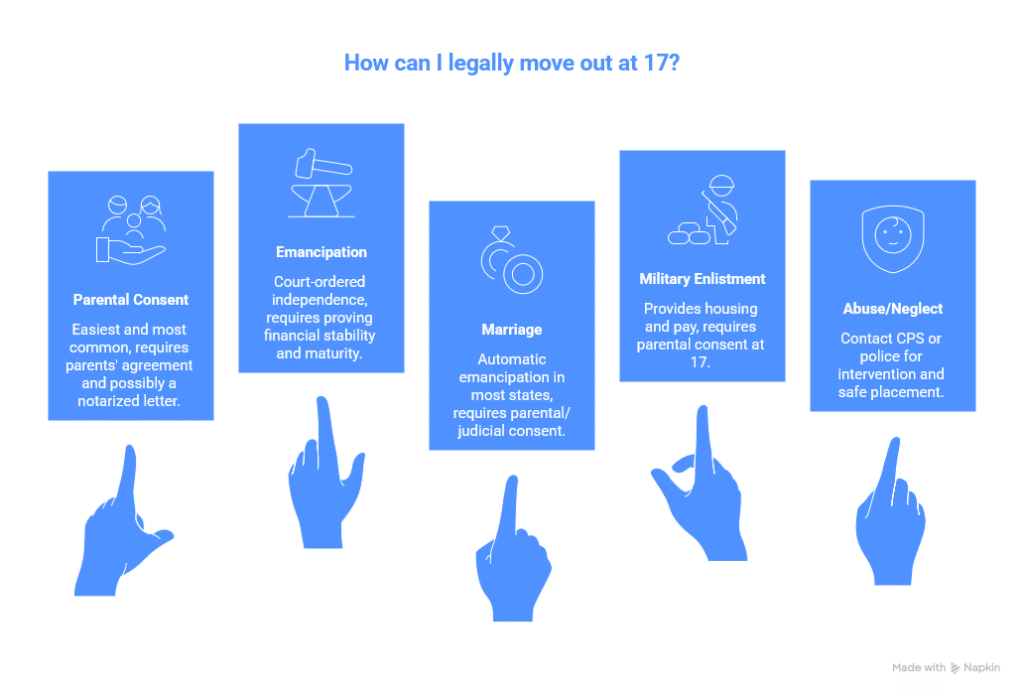
Parents can legally allow a 17-year-old to live elsewhere. They may sign a temporary guardianship or custody paper. This makes the move official and avoids legal issues. The new guardian could be a relative or trusted adult. Parental consent is the simplest and safest way to move out.
Emancipation Process
Emancipation is a court decision giving a minor adult rights. It requires proving financial independence and maturity. The minor must show they can care for themselves. Courts check if the minor has a safe home and income. This process can be long and needs legal help. Once emancipated, the 17-year-old can live alone legally.
Safe Living Conditions Exception
If the home is unsafe or abusive, laws protect the minor. Authorities like child protective services step in to help. The minor can contact hotlines for support and shelter. This exception allows moving out without parental consent. It focuses on the minor’s safety and well-being first.
Emancipation Details
Emancipation is a legal process that lets a minor live independently. It grants the minor adult rights before turning 18. This process requires meeting certain conditions and proving readiness to the court.
Understanding emancipation helps clarify if a 17-year-old can move out legally. The law aims to protect minors while allowing independence under specific rules.
Requirements For Emancipation
States set different rules for emancipation. Commonly, minors must be at least 16 or 17 years old. They need to show maturity and ability to handle adult responsibilities. Proof of stable income and a safe place to live is essential. Courts check if emancipation suits the minor’s best interest.
Court Procedures
Emancipation starts by filing a petition with the local court. The minor must attend a hearing and explain why independence is needed. Parents or guardians usually get notified and can object. Judges review evidence about the minor’s maturity and living situation. If approved, the court issues an emancipation order.
Financial Independence Proof
Minors must prove they can support themselves financially. This includes steady income from a job or other sources. They must show ability to pay for housing, food, and bills. Providing bank statements, pay stubs, or rental agreements helps. Courts want assurance the minor won’t rely on parental support.
Options If Home Is Unsafe
Leaving home at 17 can be difficult, especially if your living situation feels unsafe. Many teens face challenges at home that make staying harmful. Knowing your options helps you find support and safety. There are services and legal ways to protect yourself. They can guide you to safer places and offer advice.
Child Protective Services
Child Protective Services (CPS) helps minors in unsafe homes. They investigate reports of abuse or neglect. CPS works to protect your safety and well-being. You can contact them if you feel threatened or harmed. CPS can arrange temporary foster care or placement with a trusted adult. Their goal is to keep you safe while respecting your needs.
National Runaway Safeline
The National Runaway Safeline offers help for teens in crisis. They provide free, confidential support by phone or online chat. You can talk about your situation without fear. The Safeline connects you to local shelters and resources. They help you plan safe steps if you decide to leave home. Trained counselors listen and guide you toward safety.
Legal Support And Resources
Legal support can clarify your rights as a minor. Lawyers or legal aid organizations offer advice about leaving home legally. They explain emancipation and other options available to you. Legal help ensures your safety and protects your future. Some groups offer free services for teens in need. Seeking legal help gives you stronger protection and peace of mind.
Practical Steps Before Moving
Moving out at 17 requires careful planning. You must understand the legal and personal steps involved. Preparing well helps avoid problems with parents and the law. It also ensures you have a safe, stable place to live. The following sections guide you through key actions to take before moving.
Communicating With Parents
Talk openly with your parents about your desire to move out. Explain your reasons calmly and clearly. Listen to their concerns and try to address them. Honest communication can reduce conflicts and build trust. It may lead to agreements that work for everyone.
Getting Agreements In Writing
If your parents agree to your plan, get the details in writing. A written agreement protects both sides and avoids confusion. Include where you will live, who will care for you, and how schooling or health needs will be met. Signed papers can serve as proof if legal questions arise later.
Consulting Legal Professionals
Speak with a family law attorney or counselor before moving out. They can explain your rights and the laws in your state. Legal advice helps you understand emancipation and other options. Professionals can guide you to make safe, lawful choices. This step reduces risks and prepares you for challenges ahead.
Risks Of Leaving Without Approval
Leaving home at 17 without permission carries serious risks. It is not just about moving out. It affects your legal status, education, and health care. Understanding these risks helps you make safer choices.
Legal Consequences
At 17, you are still a minor under the law. Parents or guardians have legal custody. Leaving without their approval can be seen as running away. Parents can report you to authorities. Courts can order your return. You may face legal trouble for breaking curfew or truancy laws. Courts might also decide your living situation is unsafe if you move out alone.
Impact On School And Health Care
School attendance is mandatory until 18 in many places. Leaving home can disrupt your education. Schools may not know your new address or how to contact you. This can lead to missing classes or falling behind. Health care access might also become difficult. Without parental support, getting medical care or insurance can be harder. You might lose access to regular checkups or emergency services.
Potential Police Involvement
The police can get involved if you leave home without approval. They may be called by worried parents or school officials. Police might return you to your parents or guardians. In some cases, they will check if your new living situation is safe. If they find abuse or danger at home, they may contact child protective services. Police involvement can add stress and complications to your situation.
Frequently Asked Questions
Can Your Parents Legally Stop You From Moving Out At 17?
Parents can legally prevent a 17-year-old from moving out unless the teen is emancipated or has parental consent.
What If My 17 Year Old Wants To Move Out?
A 17-year-old cannot legally move out without parental consent or court-approved emancipation. Emancipation requires proving financial independence and maturity. If home is unsafe, contact child protective services for help. Discuss options openly with parents and seek legal advice for guidance.
Can A 17 Year Old Stay Away From Home?
A 17-year-old cannot legally leave home without parental consent or court-approved emancipation. Emancipation requires proving financial independence and maturity. If home is unsafe, contacting authorities or support hotlines is advised. Always seek legal advice before moving out.
What Can I Do If My 17 Year Old Refuses To Come Home?
Talk openly with your 17-year-old to understand their reasons. Seek family counseling or legal advice about emancipation or guardianship. Contact child protective services if the home feels unsafe. Always prioritize safety and legal options for minors in your state.
Conclusion
Moving out at 17 is not simple or always legal. Most states require parental consent or court approval. Emancipation offers a legal way but needs proof of independence. Unsafe homes call for help from authorities. Talking to parents and professionals can ease the process.
Understand your options before making decisions. Staying safe and following the law matters most.
Disclaimer: The content on this page is for general information only and should not be considered legal advice. We work hard to provide accurate and up-to-date details, but we can't guarantee the completeness or accuracy of the information. Laws and rules change often, and interpretations may vary. For specific advice, always consult a qualified legal expert. We are not liable for any actions you take based on this information. If you spot any errors or outdated content, please contact us, and we’ll update it as soon as possible.