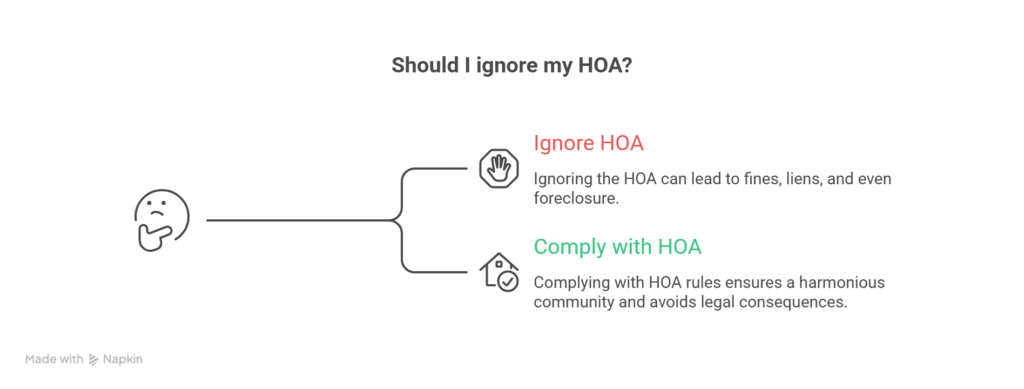
Are you tired of feeling trapped by your Homeowners Association (HOA) rules? You might wonder, “Can I just ignore my HOA and avoid all the hassle?” It’s a question many homeowners ask when faced with fines, restrictions, or ongoing disputes.
But before you decide to brush off your HOA’s demands, you need to understand the real consequences that come with ignoring them. You’ll discover what happens if you don’t follow your HOA’s rules, whether it’s legally possible to ignore them, and how to protect your rights without risking costly penalties.
Keep reading to find out how to handle your HOA smartly and avoid headaches down the road.
HOA Authority Explained
Homeowners Associations (HOAs) have clear authority over their communities. This authority comes from legal documents and state laws. Understanding this power helps explain why ignoring an HOA can cause problems.
HOAs set rules to keep neighborhoods safe and attractive. They enforce these rules through various powers granted by law and their governing documents. The scope of their authority varies by state.
Legal Basis Of HOAs
HOAs exist because homeowners agree to follow certain rules. These rules are in contracts called Covenants, Conditions, and Restrictions (CC&Rs). When you buy a home in an HOA, you accept these terms.
The CC&Rs give the HOA the legal right to manage the community. Courts generally uphold these contracts unless they violate state or federal law. This means HOAs have a solid legal foundation.
Enforcement Powers
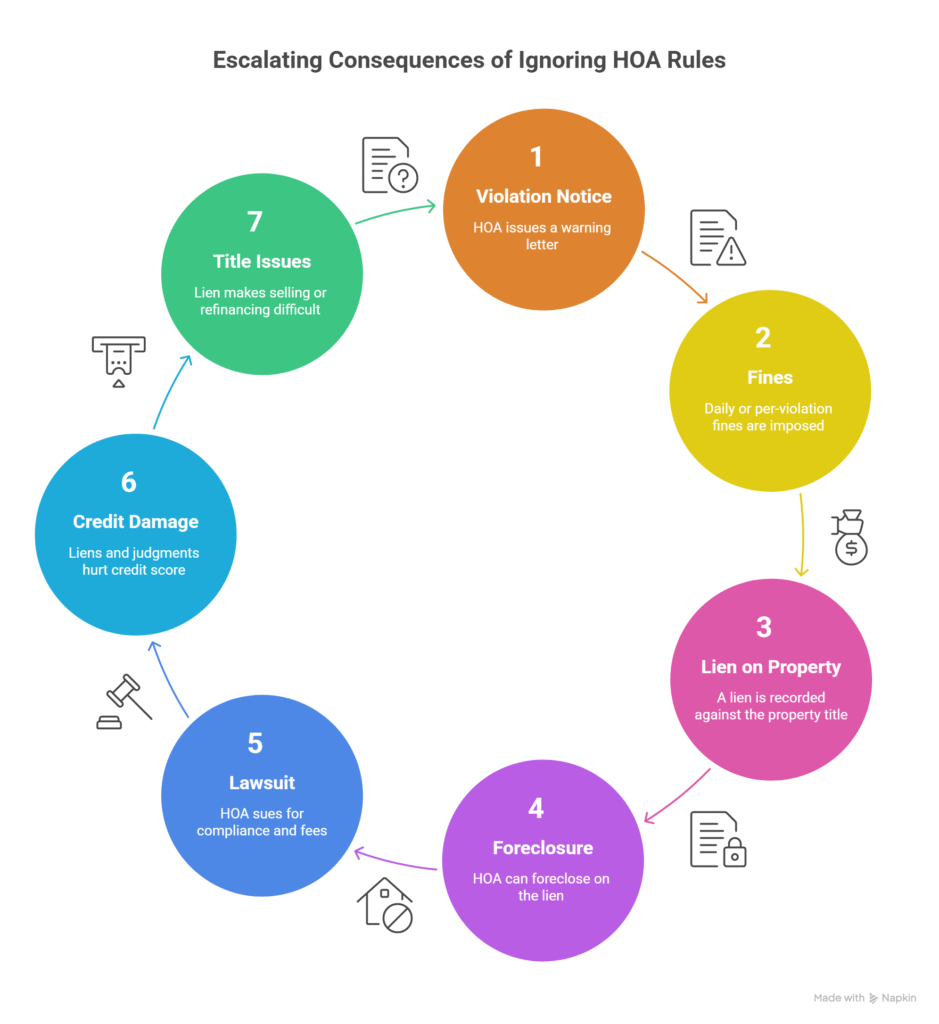
HOAs can enforce rules by charging fines or penalties. They may also place liens on properties for unpaid dues. In extreme cases, HOAs can start legal actions to collect debts or enforce rules.
These enforcement powers help maintain property values and community standards. Ignoring an HOA’s rules or fees can lead to escalating consequences, including legal trouble.
State Law Variations
Each state has different laws governing HOAs. Some states give HOAs broad powers, while others limit their authority. Knowing your state’s rules is essential for understanding your rights and obligations.
State laws also affect how HOAs collect fees and enforce rules. Some states require HOAs to follow strict procedures before taking legal steps. This variation means HOA authority is not the same everywhere.
Common HOA Rules And Dues
Homeowners Associations (HOAs) set rules and collect dues to manage neighborhoods. These rules maintain property values and community harmony. Understanding common HOA rules and dues helps homeowners know their responsibilities and limits.
Typical Covenants And Restrictions
HOAs create covenants to control property use. These rules cover paint colors, landscaping, and parking. They may also restrict noise levels or pet ownership. Homeowners must follow these guidelines to keep the community uniform and attractive.
Payment Obligations
Homeowners pay regular dues to support community services. These fees cover landscaping, security, and maintenance of shared areas. Dues are usually monthly or quarterly. Timely payment is required to avoid penalties or loss of privileges.
Consequences Of Nonpayment
Ignoring HOA dues can lead to serious problems. The HOA may charge late fees or fines. If unpaid, a lien can be placed on the property. In extreme cases, the HOA can start foreclosure to recover debts.
Risks Of Ignoring An HOA
Ignoring a Homeowners Association (HOA) is risky. These organizations have legal power to enforce community rules. Ignoring their demands can lead to serious problems. Homeowners face consequences that affect finances and property rights. Understanding these risks helps you avoid costly mistakes.
Fines And Penalties
HOAs can impose fines for rule violations. These fines grow if ignored over time. They may charge daily fees until the issue is fixed. Fines can become a heavy financial burden. Ignoring initial warnings often leads to bigger penalties.
Liens And Foreclosure
Unpaid fines or dues can lead to liens on your home. A lien means the HOA claims your property for unpaid debts. This claim affects your ability to sell or refinance. Persistent nonpayment may result in foreclosure. Losing your home is a real danger when ignoring the HOA.
Legal Action And Costs
HOAs can take legal action to enforce rules and collect debts. Lawsuits bring extra costs like attorney fees and court expenses. Defending yourself in court can drain your time and money. Legal battles harm your credit and reputation. Ignoring the HOA rarely ends without expensive consequences.
Challenging HOA Rules
Homeowners can challenge HOA rules, but it takes effort. These rules are part of a contract signed when buying property. They set standards for the community. Not all rules are fair or clear to every owner. Changing them may improve your living situation.
Understanding how to challenge these rules helps you protect your rights. It also allows you to have a voice in the neighborhood. Here are key ways to challenge HOA rules effectively.
Amending Bylaws And Ccrs
Bylaws and CCRs are the main documents that govern HOA rules. To change a rule, you usually need to amend these documents. This process often requires a vote by the HOA members. The exact steps depend on the HOA’s governing documents and state laws. Gathering support from neighbors is vital. Clear communication and organized effort can help pass amendments.
Board Elections And Influence
The HOA board controls rule enforcement and changes. Homeowners can run for board positions to influence decisions. Voting in board elections gives you a say in leadership. Being on the board lets you propose new rules or remove unfair ones. Staying active in meetings helps you stay informed and voice concerns. Building alliances with other members strengthens your influence.
Legal Recourse Options
If HOA rules violate your rights, legal action may be an option. Consulting a lawyer helps understand your case. You can challenge fines, liens, or unfair enforcement in court. Mediation or arbitration might solve disputes without a lawsuit. Keep detailed records of all communications and violations. Legal steps should be a last resort after other efforts fail.
Protecting Your Rights
Protecting your rights in a Homeowners Association (HOA) is important. Many homeowners wonder if they can ignore HOA rules or fees. Knowing your rights helps you avoid penalties and legal trouble. It also allows you to take action if you disagree with HOA decisions.
This section explains how to protect your rights by understanding your contract, using negotiation and mediation, and hiring legal counsel when needed.
Understanding Your Contract
Your HOA contract is a legal agreement you signed when buying your home. It includes rules called CC&Rs (Covenants, Conditions, and Restrictions). These rules explain what the HOA can require from you. Knowing these details helps you see what you must follow and what you can challenge.
Read your contract carefully. Check for fees, fines, and rules about property use. Understanding these terms helps you avoid surprises and plan your next steps.
Negotiation And Mediation
Disagreements with your HOA do not always need a court case. You can try negotiation to reach an agreement. Talk to the HOA board or management to explain your concerns. Sometimes, they may agree to changes or exceptions.
Mediation is another option. A neutral third party helps both sides find a solution. This process is less costly and faster than going to court. It keeps communication open and can preserve good community relations.
Hiring Legal Counsel
When issues with your HOA become serious, hire a lawyer. A lawyer knows HOA laws and can protect your rights. They review your contract and advise you on the best steps. Lawyers can also represent you in negotiations or court if needed.
Legal help ensures you do not miss deadlines or important details. It can stop unfair treatment and help resolve conflicts fairly.
Alternatives To HOA Living
Choosing to live without an HOA means freedom from strict community rules. Many homeowners want fewer restrictions on their property. There are several options outside typical HOA living. These alternatives offer more control over your home and lifestyle.
Non-hoa Communities
Non-HOA communities do not have homeowners associations. Residents make their own decisions about their properties. There are no monthly HOA fees or mandatory rules. This can mean less control over neighborhood appearance. But it allows more personal freedom. These areas often have fewer shared amenities. Some buyers prefer this simplicity and independence.
Buying Outside Hoa Jurisdictions
Some areas are not governed by any HOA. You can search for homes in these zones. Rural or older neighborhoods often lack HOA oversight. Buying here avoids HOA contracts and fees. It means fewer restrictions on property use. Yet, you may lose community services and maintenance. Consider your priorities before choosing this path.
Pros And Cons Compared
HOA living offers maintained common areas and community rules. This keeps neighborhoods uniform and clean. But rules can feel limiting and costly. Non-HOA living gives freedom and fewer fees. Yet, neighbors may not follow shared standards. Services like landscaping or security might be missing. Weigh these pros and cons carefully. Your choice affects lifestyle and property value.
When You Can Legally Fight or Ignore HOA Rules
You cannot simply ignore the HOA, but you can challenge them in these situations:
-
Rule violates federal or state law
-
Example: HOA bans service animals → violates Fair Housing Act (42 U.S.C. § 3604)
-
Example: HOA discriminates based on race, religion, disability → Fair Housing Act or state law violation
-
Example: HOA bans political signs → may violate First Amendment in some states (e.g., California, Florida)
-
-
Rule is “unreasonable” or arbitrary
-
Some states allow courts to strike down rules that are arbitrary, capricious, or violate public policy (e.g., California’s Lamden v. La Jolla Shores Clubdominium Homeowners Assn., 1999)
-
Very high bar — most rules are upheld
-
-
HOA failed to follow its own procedures
-
Did not give proper notice, hearing, or follow bylaws → violation may be invalid
-
-
You are not subject to the HOA
-
If your property was never properly annexed or deed-restricted to the HOA (rare but possible)
-
-
Statute of limitations or laches
-
If HOA waited too long to enforce a rule (varies by state)
-
Frequently Asked Questions
What Happens If You Don’t Do What Your Hoa Says?
Ignoring your HOA can result in fines, liens on your property, legal action, and damage to community relations.
Why Can’t You Just Ignore The Hoa?
Ignoring the HOA breaches your legal contract and risks fines, liens, or even foreclosure to recover unpaid dues and fees.
Is There Any Way To Get Around Hoa Rules?
Homeowners cannot simply bypass HOA rules. They must follow or legally challenge them through the HOA’s processes. Ignoring rules leads to fines, liens, or legal action. The only legal way around rules is to propose changes and gain community approval.
Compliance protects property and community harmony.
What Power Does An Hoa Actually Have?
An HOA enforces community rules through fines, liens, and legal action. It manages common areas and collects dues. Homeowners agree to these powers by purchasing property within the HOA. Ignoring the HOA can lead to penalties and legal consequences.
Conclusion
Ignoring your HOA can lead to serious legal and financial trouble. HOAs have the power to enforce rules and collect fees. Failing to comply may result in fines or even liens on your property. Understanding your HOA’s rules helps avoid conflicts and costly penalties.
Stay informed and communicate with your HOA to protect your home and rights. Respecting HOA agreements keeps your community safe and your investment secure.
Disclaimer: The content on this page is for general information only and should not be considered legal advice. We work hard to provide accurate and up-to-date details, but we can't guarantee the completeness or accuracy of the information. Laws and rules change often, and interpretations may vary. For specific advice, always consult a qualified legal expert. We are not liable for any actions you take based on this information. If you spot any errors or outdated content, please contact us, and we’ll update it as soon as possible.